

Friday, May 01, 2009

What happened that cold winter....

Part II of A Queens Mother...
And...as I was saying on the post below...what happened when they got to Sidmouth was so terrible that... WELL, I'm getting ahead of myself here. Victoria's mother and father, The Duke and Duchess of Kent, arrived at Sidmouth on Christmas Day during quite a snowstorm. Here they would spend their holiday at the sea. The "cottage" was very close to the sea...only about 150 yards from it. The Duke had just gotten over a gastric upset but was feeling better. Little did they know that it was to be one of the coldest and severest winters anyone could remember.

A few days after Christmas, the Duchess of Kent was sitting in the drawing room. It was a quiet afternoon and baby Princess Victoria was with her.The quiet was literally shattered as a bullet blast through the drawing room windows. It turned out to be a local boy shooting birds...and he'd misfired. The royal couple did not want him punished, however, it must be prevented from ever happening again.

The days were sunny and cold, but the nights were bitter. The Duke wrote that the nights were "rather canadian." During the day the Duchess walked near the sea with Princess Feodora (Victoria's half-older sister) and worked hard on her English lessons. She was still speaking fluent German, and had a hard time conversing in English. The Duchess took some sea baths and the Duke spent time writing letters.

About January 7th, the Duchess began to worry. Baby 'Vickelchen' was restless and she feared the baby wasn't feeling well. The Duke also caught a cold. However, he insisted on going outside with Captain Conroy--his equerry--to look after the horses. He returned later chilled to the bone and wet. The next day his cold got worse--quite. He couldn't even walk outside with the Duchess. He rested but was not better the next day. They were expecting company and the Duke would not hear of cancelling. He wanted his guests to come that evening. As a wife and mother, the Duchess must have worried.

That night, his fever rose. Alarmed, the Duchess summoned the doctor the very next day. The doctor didn't like the way the patient looked at all and was concerned. The Duchess was determined to take care of him and nurse him back to health. She worried, though, about his cold room. It had such a draft. Even with the fireplaces lit it wasn't sufficiently warm. She wrote to a confidant that her beloved husband was very ill but that she was nursing him to the best of her ability. Feodora also caught a chill but the baby Victoria seemed better.

But then the doctor decided that he needed to bring in the dreaded leeches. They believed that blood letting would bring down the fever and so they were applied to his chest. On the 12th of January, the Duchess had the Duke's bed moved to a warmer room. It was really imperative to keep him as warm as possible. His fever has risen, he had pains in his chest and other symptoms. The doctor decided to blood let him again when he became delirious. And when that didn't help him, he needed to be bled again.

He was being tormented...couldn't anyone see that? the Duchess thought. It anguished her deeply to watch him suffer through this...with all these blisters on his chest. He wasn't getting better...he was getting weaker. She sent for the royal physician--begging for him to come.

The doctor that was there urged her to rest but she couldn't. She stayed by her husbands side and hand fed him all his medication herself. She tried to comfort him and reassure him. She spent a few minutes when she could with Victoria, but was upset and inconsolable. Here they were in this place--this frozen place at the sea--and all alone. They were so far from help...so secluded. It was more than she could bear. Oh, why had they come?

But there was more to bear. The doctor decided that the Duke should be cupped, which was another form of blood letting, but this one more painful. The Duchess would barely watch the scene as this went on hour after hour. Her dear husband was near delirium and in great pain.

Soon though, one of the royal doctors arrived. It wasn't the one she had hoped for, as he was tending to the King. The new doctor decided that more blood letting needed to be done. They had already taken 6 pints of blood from him. But...he was a strong man. He had always been one of the very strongest of the Princes. He would pull through. If any of the King's sons could, it would be him.

The Duchess of Kent wrung her hands in misery as she watched this blood letting go on ---for days. It was so painful for the Duke that at one point he cried when they told him they needed to do it again. His wife felt it was weakening him---yet, no one listened to her. Anyway, she had trouble communicating with the doctors.

Word was sent to the Duchess's brother---Prince Leopold. Leopold had been married to the Prince Regents daughter, but unfortunately, she had died in childbirth. The Prince and some others headed to Sidmouth in the frigid cold. It was an icy cold that Leopold would never forget. They arrived to find the Duke in a terribly weakened state. Soon after they arrived he used the last of his strength to sign his will. His wife remained at his side--she would not leave him-- and was holding his hand tightly as he took his last breath and passed away.

They had cherished each other and the Duke had shielded her in all ways. What would she do without him? Here she was in a foreign country, barely able to speak English. Yet...baby Princess Victoria was in line for the Throne and as much as she wanted to FLEE---she could not. Prince Leopold reminded his german sister that she had a destiny to fulfill. Victoria must stay in England. Yet, she couldn't believe that her husband was...gone. He had protected her...he had been her dearest friend and confidante. And...the royals did not like her.

It was then that she found out that since the Duke was in terrible debt, there was not even enough money to pay for the trip back to London. Victoria was only 9 months old...and Leopold felt sure they (the royals) wanted to drive the Duchess from the continent.

In late January they left the cottage, never to return. Leopold took his sister and the children back to....well...actually...they didnt know where she was to go. The Prince Regent wasn't fond of the Duchess and it wasnt known if he would allow her to return to her home at Kensington Palace. They couldnt go to Claremont (Leopold's home) because there had been an outbreak of measles.

Not knowing what to do, Leopold begged Princess Mary, the Prince Regents favorite sister to help him. She interceded and permission was granted for the widow to return to Kensington, and a letter was dispatched to Leopold as they journeyed back.Thank goodness! After all, the Prince Regent couldn't throw a widow out in the cold, could he? But when they arrived home, there was more bad news. The creditors wanted to be paid, and the Duchess had nothing. Not only was she coping with being a widow, she had no source of income and the creditors wouldn't leave her alone.

Several requests were sent to the Prince Regent to help. Here she was---a widow with children, and one in line to the Throne of England---certainly, something should be done to help her. She deserved some pity. And the Prince Regent said...NO! He wouldnt throw her a pence. He would give her nothing. The creditors took everything--furniture, glasses, linens, horses and carriages. They took anything that wasnt nailed down and was worth anything at all. The Duchess was left with nothing. Nothing. Can you imagine her thoughts and anxiety as she watched her possessions being carried out?

No husband. No money. No things. And she had a baby.

So much has been said of Victoria's mother. I wonder, though, if that happened to you...what you would have done? And, this reads like fiction. Sometimes the real thing is crazier than any fiction one could imagine.

And thats how Queen Victoria's mother started out... in that, oh, so wonderful year of 1820....


Sunday, March 29, 2009

A Queen's Mother

s


You may have noticed that I've neglected the blog, but I do have a good reason and I'm getting back to it now---and have stacks of to be read Queen biographies piled high. First off, I decided to go back to work full time and also got a promotion and so the job needed my undivided attention, as you can imagine. And you know how that is. There was much to learn and it's been exhausting. I was also offered a contract for "Royal Watercolors" which is a romantic historical--with many true details of the life of Young Queen Victoria in it-- and I've been busy working on that. Edits, edits and more edits. But it came out beautifully...and will be released soon in A DANCE OF MANNERS, by Highland Press. It's a Regency Romance Anthology. The cover is up at the top right, and it came out lovely. There will be four other regency romances in the anthology by some very talented authors. If you haven't heard the term regency, it simply refers to a period of time in England from about 1800 to 1830 approximately (that's the long regency period).

It came as a shock to me---this whole book thing!---but, as you know some of the best things in life come unexpectedly.

You may have heard that the movie "Young Victoria" was released in England this month. I've been following this closely. Queen Elizabeth seemed a bit disappointed in some of the details of the movie, but overall I think she liked it. Sarah Ferguson, the former Duchess of York, was instrumental in getting this movie made due in part to her fascination with Queen Victoria---alas---I am fascinated with her too. I've got a copy of the screenplay which I hold dear. And I've even dashed off some emails to some VIP's involved with the movie. The United States hasn't yet announced a release date, if any, but I hear there are negotiations underway. No one has ever done a movie on her young life. I think people will be surprised when they see that Victoria had a thrilling young life and she isn't the Queen in black widow's weeds as they'd been lead to believe. That's only part of her life.

In my novella, you'll get a feeling of what it was like for her living in Kensington Palace---alone, with only her governess and her "Mamma" for company. She was shielded, lonely---and many of her relatives simply couldn't bear to be near her German mother. And did you know that Victoria was conceived in a race to have a new heir for the Crown after her cousin Princess Charlotte died unexpectedly during childbirth? It was a terrible shock to the nation. It threw the royal family into a tizzy, and quite frankly things were never the same.

Much has been said and written about Victoria's mother---the Duchess of Kent. She was a minor royal in Germany when she was introduced to the King's son, the Duke of Kent. He was looking for a wife in the race to produce an heir. She had two other children from her first marriage---a girl, Feodora and a boy, Charles. She was a widow. She took to the Duke of Kent. He was kind to her...very kind. He took care of many of the details and worries which concerned her. She genuinely cared for him and he genuinely cared for her too. The Duke had given up his long time mistress---which hurt him---but he knew that he must produce an heir. In order to do that he needed to marry and have any future child on English soil.

Unfortunately, it wasn't as easy as all of that. His brother, the Prince Regent who had recently lost his own daughter Charlotte, didn't care for his brother at all. He wouldn't lend a hand to help his brother establish a residence in England for his future wife or help him with his mountain of debts. He didn't care less that his brother had married this minor German royal and that she was soon expecting a baby. The Duke of Kent reminded his brother that his wife might be carrying the future sovereign of England. The Prince Regent couldn't care less.

The reason the Prince Regent was called "Regent" was because his father, the King of England, was locked away in Windsor Castle and had been declared insane. Therefore, the King needed a regent, someone to make the decisions for the crown. The Kings eldest son did that and was therefore known as the Prince Regent...and that's where you get the term "regency" from. From the time the King went insane until the time the Prince Regent became King was known as the "regency" period. (Actually, the time until the death of the Prince Regent who was King at the time of his death is known as the long regency period.)

Enough of that. Here we have the poor Duchess of Kent....expecting. She has two other young children and she needs to leave her beloved home in Germany...and travel to England which was an uncomfortable and long trip for someone in her condition. And did anyone care? Did anyone help her? No. And she didn't even know how to speak English.

Some of the Duke of Kent's sisters intervened and spoke to the Prince Regent about preparing a place for the new couple who would be arriving in England, but the Prince was simply not interested. Did he hate the fact that his own daughter had died and that someone else would be succeeding him as sovereign?

Many letters flew back and forth from Germany and England. The Duke and Duchess of Kent knew they weren't being welcomed with open arms. It must have hurt the Duchess to know that. She had done nothing wrong. Her whole life was being turned upside down with this move to England and she was even having a baby. No one would give her husband the respect he was due, as one of the King's sons. The baby was due in May. The Duke and Duchess of Kent knew they needed to set off well in advance of that date so that the baby was born in England. It had to be. They could not take a chance that if the baby was born early they were not in England.

It was a long and tiring journey and one of the Duke's most trusted servants came with them. His name was Sir John Conroy, and he was very helpful to the Duke and Duchess. But one day...none of them could have known...Sir Conroy would be involved in a bitter dispute with Victoria and the cause of much misery. But, none of that had come about yet.

When they arrived in England, they were given apartments in Kensington Palace. The Duke of Kent was appalled. The apartments were in a total state of disrepair. (OH, and let me say that these apartments are not what WE would think as apartments....several bedrooms, a small drawing room...a library.....NO. They were massive apartments with at least two floors. There were servants rooms, a kitchen, libraries, bedrooms and sitting rooms, drawing rooms...even small ballrooms in some....) Still though, there were terrible drafts coming in through the windows, much of the wood was rotted in the window frames, it smelled damp, the rugs were threadbare, paint peeling and it was generally run down. Although the Duke of Kent was stretched for money, he somehow made arrangements for the interiors to be fixed adequately and he and the Duchess ordered furniture---even nursery furniture. Although ignored by the royal family by the most part, they were supremely happy when they moved into the apartments only several days before Princess Victoria was born in the middle of May.

The Duke of Kent was simply overjoyed! He doted on his wife and the baby Princess and spent much time in his new library which had been decorated elaborately. It was a happy time for the couple, although the Prince Regent treated them terribly on the day of Victoria's christening. He treated them so harshly that the Duchess of Kent was forced to hold back her tears. The Regent would not even agree to the parents choices of names for their child. She was to be known as Alexandrina.

Several months later, the family traveled to Sidmouth, near the sea. It was to be their Christmas holiday. It was the coldest winter there in many years...at least as far as anyone could remember. They were excited to be there, but I suspect that with the wind, the terrible cold and snow they were hesitant to stay... and what happened there not only will chill you to the bone...you will never forget it as long as you live.

And I'll write about that next time.

Saturday, March 28, 2009

Many thanks


Cinderella from the World of Royalty kindly awarded me the Proximate Award which is given to "friendly bloggers"...and so I thank her for that. I refer to the World of Royalty often. I now have the luxury of awarding it to eight other friendly bloggers--and all excellent blogs as well, and I daresay far better than mine!

Tea at Trianon

Scandalous Women

Medieval Woman (Reading, Ranting and Raving)

Enchanted by Josephine

Sandra Gulland Ink

Writing the Renaissance

Passages to the Past

Jane Austen's World

Reading the Past

Versailles and More

You might notice I chose ten--forgive me---I couldn't help myself. They're all fabulous and unique. (I'm pretty sure that some of them have already won this award and some other awards as well.) Pssst...I won't say anything if you don't. And if you have the time, you won't be sorry if you browse through any of the above. You'll get lost in them, I'm sure.

Thursday, January 22, 2009

Pictures for a gray January


Wednesday, June 04, 2008

Not Queen, but Mistress


Yesterday, Sandra Gulland's new book titled Mistress of the Sun was released in the United States. For those of you who aren't familiar with her, she is the critically acclaimed author of the trilogy of novels about Josephine Barnoparte. I've mentioned the trilogy before on my blog because I enjoyed them so much and Sandra really brought the Empress Josephine to life. And because I love QUEENS so much---well, of course I loved that. Her new book is about the life of Louise de la Valliere who was the much beloved mistress of the famous Louis XIV of France.
I'm amazed at her work, really. I was lucky enough to chat with her recently online in a royalty group and she graciously agreed to tell me about the process of writing the book. Right now she is on a publicity tour throughout the U.S. If you have a chance to read the book, please do so. I can highly recommend it. I was lucky enough to get an advanced copy and I can tell you that I was immersed in the court life which took place centuries ago in France. Louise was not a Queen...but, if things had been just a little different, she might have been.
Here's the interview:
*******
Sandra, one of the reviews for your new book really caught my eye...."No one gets more deeply into the heart and mind of a historical character than Sandra Gulland. In Mistress of the Sun, the joys and sorrows of Louise de la Vallière are so real and immediate that I now feel as if Louis XIV's first mistress was a dear friend." -- Susanne Dunlap, author of Lizst's Kiss
How do you manage to give your characters such depth and such soul?
It comes down to imagining what it was truly like for a character — but this is not something that comes naturally or easily. It takes countless drafts to reveal a character's emotional reality: What was it really like for her? How did she really feel? Creating multi-dimensional characters is also something that develops over time, over many drafts. A character may be wooden and one-dimensional in early drafts, and then slowly begin to round out, to flower. Details make a difference.
Please tell us about your new book, Mistress of the Sun.
Set in 17th century France, Mistress of the Sun is a novel about Louise de la Vallière, a name that will likely be unfamiliar to people outside of France. As mistress to Louis XIV, the Sun King, she was, in effect, the "real" wife to one of the most powerful and charismatic kings in history.It's a remarkable period, at the early stages of modernism, yet with strong elements of the Middle Ages. Witchcraft was no longer punishable by death, for example, but that didn't mean it wasn't practiced: and with dire results. What interested me most was the use of "bone magic," a type of witchcraft practiced on horses.
Why did you choose 'The Mistress' ? What was it about Louise de la Valliere that appealed to you?
Louise was reported to be shy and timid, yet she was something of a tomboy, extraordinarily daring on horseback. She was sincerely devout, yet she became France's official "fallen woman." Like Josephine, she was an unlikely young woman to rise to such a prominent position. She was of relatively modest birth, an unambitious and, although cultured and intellectual, a somewhat unsophisticated young woman. It was the contradiction of all these elements that drew me to her ... but most of all, it was her amazing horsemanship. Clearly, this was a young woman who was spending most her her time on the back of a horse. She was not at all typical of the women of the period.
You seem to be drawn to royal figures. What intrigues you about them?
On a practical level, I’m interested in the lives of real people, and royal lives are documented. I will read a biography and get interested — so visibility is part of it. With both Josephine and Louise, however, what interested me is that they were not born into that royal world ... so it’s not hard to identify with them. They are like strangers in a foreign land, and we make that journey with them.
Could you tell us a little about your writing process for "The Mistress of the Sun?"
I started to write about Louise after I finished The Last Great Dance on Earth, the first of the Josephine B. Trilogy. I thought I would take a year off from Josephine’s story and sketch out the rough draft of a novel about Louise before returning to Josephine. (An unrealistic plan!) I was about six months into a novel about Louise, and quite caught up in it, when I was offered a contract for the Trilogy. At that point I had to drop everything and jump back into Josephine’s world. I put my notes and pages about Louise in a box: I told myself I would get back to this novel after I finished the Trilogy. Of course, it was many years! In 2000, after the publication of The Last Great Dance on Earth, the last of the Trilogy, I opened that box. By that time, I had three novels published, and I knew a bit more about what it took to write a historical novel. For one, I needed to do considerable research. It took time for me to collect resources and become comfortable in a 17th century setting. In particular, I also understood what a challenging story Louise’s would be to tell, that it would be hard to make work, impossible! After writing a (flat) first draft, I decided to write about La Grande Mademoiselle instead. That didn’t work either. So I thought I’d add Athénaïs, Marquise de Montespan, into the mix: that didn’t work. You have to understand that each of these dead-ends took a year. Then I tried mixing the three stories together: what a mess. Ultimately, after many years, I sent a draft that told the stories of both Louise and La Grande Mademoiselle to my agent. She reported back that she really liked Louise’s story. I was so relieved! Later she mentioned, over lunch, as if in passing, that La Grande Mademoiselle didn’t really come to life for her. I returned home pleased with the feedback—until I realized that the part that didn’t work was well over half of the manuscript. At that point I decided that I was just going to have to brave it and tell Louise’s story. I went back to my original notes and started again. It was a long, arduous process: many, many drafts, and many up-to-the wire additions and deletions. It wasn’t until the very last that I knew how it would end, for example.
I know it is now available in Canada. When will the book be released in the USA?
Mistress of the Sun is officially out in the U.S. June 3.
Before you wrote your current book, you were very busy with your Josephine Bonaparte trilogy, which is so widely popular. Could you tell us a little about what you loved about Josephine and the process of writing about her?
Josephine was a lovely person to spend a decade with. She was savvy and sympathetic, loyal — a really good people-person — but the most amazing thing about her from a writing perspective is that she was right at the center of what was happening in France through many changes in government. She had the best view, you might say, of anyone. Through her eyes, you could see it all unfolding. There aren’t many people in history with such a dramatic life story, both on the personal and political levels. For a novelist, Josephine’s life was like a treasure chest of riches. I was astonished that more hadn’t been written about her.
Do you miss Josephine? Was it hard putting her books away and preparing for a new subject?
It was quite hard to finish the Trilogy, knowing that that would be the end of my close involvement with Josephine and her world. I felt numb for a period of time. After about six months, I made the bold decision to sell my collection of Napoleonic books: on a practical level I needed room for books on my new subjects, but also, I think I needed to draw a line for myself, make it clear that I wasn’t going back to that period in history. I kept a small shelf of my favorites, my treasures, but let the others go: hundreds of titles. It was wrenching, but the right thing to do.
Now that you have finished Mistress of the Sun, do you miss Louise?
I’m very fond of Louise; there is still a strong connection for me. I think if I had to chose between Josephine and Louise (and it’s impossible, of course), I would prefer to have Josephine as a friend, but I would prefer to be Louise — not to have her life, which was so hard, but to have her ardent passion. What I will miss most in moving on from Mistress of the Sun is researching 17th century horsemanship, which was a significant and fascinating part of all my years working on Louise’s story.
Personally, I can't wait to get my hands on a copy. I'm sure many readers feel that way. Is there anything you'd like your fellow royal lovers to know about Louise de la Valliere?
The French translator of the Josephine B. Trilogy recently read Mistress of the Sun and reported back that he liked that I wrote about, in his words, “women of silent power.” I like that. Women of the past were often silent—and silenced—but that didn’t mean that they were without power.Can we look forward to another book in the future about a royal subject? No doubt! I’ve been thinking about a member of the royal family, La Grande Mademoiselle, the Sun King’s cousin — an early feminist, an eccentric, the wealthiest person in Europe. If I do write about her, it will be a departure for me, for she was born and raised with the expectation that she would be a queen.
******
Sandra is the ultimate "Queen Writer" !!

Friday, April 25, 2008

Coming Full Circle


What does this have to do with a Queen?

(Oh, and by the way---The Abdication Part II is below...)

You're thinking--well, what is this western picture all about? And what does it have to do with Queens, or royals? Well, I'll tell you.

Even though I have a firm grasp on my royal studies--I still need help. I need someone to look over my royal fiction and give me good boot when I use too many adverbs, use the wrong pov...and someone to tell me the truth. Luckily for me, several years ago I met a lovely girl from Britain who doesn’t live that far from Windsor Castle. She was a writer too, and a good one. We started swapping work. I was in New Jersey, reading of her heroines in New York or Arizona or Alaska...and she was in England reading about the English royals in London or at Windsor. It was sort of odd, but I suppose I wanted what she had...and she had a hankering for the US. She helped me with my Americanisms and I'd tell her if something wouldn’t ring true with us Americans. We systematically went though many manuscripts--mostly hers, I have to say...because she was more prolific than me. I'd try systematically to do several Chapters every week and send them to her at 9pm or 10pm my time so when she was waking up in England she'd have them waiting for her. I guess we complimented each other...because I gained confidence as a royal writer...and I remember when she told me "I felt a chill go down my spine" after she read one of my royal pieces. And I guess I did something good for her, because she was pounding out the work and taking my suggestions....and her hard work's been recognized. Resplendence Publishing offered her a contract for one of her manuscripts---called Circle Star—and that's the cover for it. It's just out this week. She is a wonderful author if I do say so myself. And her name is

Tatiana March....

I've been so excited about this. She's a published author. The book kept my interest from the minute I read the first scene on a ranch in Arizona until the end. The heroines name was Susanna Talbot, which was almost my name! My mom's maiden name is Talbot, and she almost named me Susanna or Sue-Ann Talbot, so I wrote Tatiana about that, and we giggled over the coincidence. What’s the chances of that? And I also told her to hurry it up and write more because I was curious about Susanna and Connor.

Tatiana and I worked very hard on several manuscripts and I came to love all her heroines. We talk about them as if they were family. And her hero....ooh, especially Connor, in Circle Star...is especially sexy and has a sort of animal magnetism. And Susanna ruins his life...and then years later, in a twist of fate---can only keep the ranch which is rightfully hers if she marries Connor...that is what her father decreed in his will. Well, she has no idea where he is ...and, even if she finds him by some miracle... will he even speak to her, much less marry her?? It's a page turner, for sure.

Sometimes in life you do well because of the people you've met in your life...they enrich your life...and make you a better person, and a better writer. And that's why I wanted to pay tribute to Tatiana today, and announce her first book, because she has worked so hard--as hard as anyone I've known, and she's enriched my life---the other side of my life that I don't talk about on here much...except to casually mention my CP or the fact that I've critted quite a few chapters. But she is a real person who has an extraordinary talent I think. She is very proud of me, and I am very proud of her. And if it wasn't for her praise of my royal knowledge and writing ability...I probably wouldn’t have ventured into the blog world or had the confidence to send proposals to agents, and sit and type away at my fiction. She's the one that tells me I have guts and talent when I feel like throwing in the towel.

Here's just a wee bit from the book...AND, I must say, she gave me a sensational excerpt!

The sensitive boy was gone, replaced by a hard man. The amber color of his eyes was exactly as she remembered, but instead of the gaze that had been gentle, sometimes a little shy, their expression was flat, almost dead. Even in repose the full lips conveyed bitterness. When he turned his head toward her, she cried out again. A thin white scar ran along the left side of his face, from cheekbone down to the jaw.
“Little Susanna, all grown up.” His voice rang deeper and a little slurred. “You took your time.”
Her lips began to tremble, and she couldn’t speak.
“You’ve finally succeeded in tracking me down. Are you just going to stand there and say nothing?” Connor lifted a hand to the bartender. When his glass was filled, he picked it up, but didn’t drink.
“You knew I was looking for you?” Susanna forced out the words. Her knees buckled, and she clung to the edge of the counter for support. The storm inside her mind blew with a thousand winds, all whistling different needs and wants. More than anything, she ached to reach out and touch his face, make it come alive again, the way it used to be.
“I can read,” Connor said. “I saw it in the newspaper.”
“But you didn’t come, or telegraph, or write.”
“Why should I?”
Susanna shrugged, feeling helpless against the hard barrier around him. “Curiosity?” she offered.
“I mind my own business and expect others to mind theirs.”
This time there was a flinch. She wouldn’t have known if it hadn’t been for the glass of whiskey in his hand, full to the brim. Some spilled over the edge, onto his fingers. Connor raised his hand and tossed back the rest in two gulps. “What’s that got to do with me?” he asked as he propped the empty glass on the counter.
“My father had you in his will.” Susanna lifted her chin and fixed her gaze upon his hard face. “That’s what he wanted to tell you that day, when you ran away. That he was leaving Circle Star to both of us together.”
Nothing changed in that stony expression. Not one flicker.
“Didn’t you hear me?” Susanna demanded, suddenly furious. “I hadn’t told him about … about that other thing. You ran off like a fool, when he was offering to make you his heir.”
“So? I ran off. That’s all in the past.” She could sense a decade of emotion packed into those few words – regret, anger, pain. She was fairly certain that if Connor hadn’t been drunk, his voice would have revealed nothing.
“No, it’s not all in the past,” she told him. “My father never changed his will. You can still have half of Circle Star.”
“Can have? Is there something I have to do first?”
“Yes.” Susanna lowered her eyes to her clenched hands. She uncurled her fingers and tilted her face up to him. “You’ve got to marry me.”
She could feel him stiffen by her side. Then, with an exaggerated casualness, he reached into his pocket and tossed down a few coins. “Get the lady a shot of brandy,” he called out to the bartender. “She looks a little shaken.” Picking up his hat, he turned and weaved his way across the room to the front door, while Susanna remained by the counter and watched him go.

Ooooh!

I tend to be picky with my fiction because my head is usually in biographies or history books. But Tatiana's fiction satisfies my cravings. Sometimes I wonder how she thinks up some of this stuff. If you'd like to check out her new book, Circle Star, just go to Resplendence Publishing at
http://www.resplendencepublishing.com/
You can also say hello to her on MySpace at http://www.myspace.com/tmromance


So, you see… this doesn’t really have to do with royalty…but yet it does.

Tuesday, April 01, 2008

The Abdication, Part II


So here’s Part II….

Wallis is in Wonderland---or so her husband Ernest says. Wallis has the security of her marriage, but also the security of knowing the Prince of Wales can arrange things just so...and much of their relationship can be kept under wraps. The British well-to-do are aware of the affair...their friendship, but the royal subjects have no idea. And anyway, the Prince will soon tire of her...won't he?

Wallis found herself overwhelmed by the Prince's attention. He began calling the flat, demanding her help at the Fort and at his residence in London. He wanted her and Ernest for weekends, and he wanted her to be a guest at Ascot. He loved her meals and the way she planned them and he thought she was a wonderful decorator. He couldn’t get enough of her.

The Prince gave orders to Osborne---the head man at the Fort---that he should take orders directly from Mrs. Simpson. Well, that was never done. It just wasn't. Mrs. Simpson flew into Osborne’s life and turned it upside down. His job was to draw up the menus but suddenly she did them personally. And she was rearranging furniture, taking down curtains, deciding what should stay and what should go into storage. To Osborne's horror, not only did he have to watch this American woman change life at the Fort, she decided that he should personally take over the daily flower arranging that was done by the maid. Osborne was horrified. Even more terrifying, she entered the sanctuary of his pantry and decided a card table should be set up. Osborne hated the no-good stupid, flimsy thing, but…it’s what the Prince wanted...

Wallis relished all these new projects and enjoyed seeing the Prince's enthusiasm at her results.

And then there was Mr. Finch at York House in London. He had been with the Prince of Wales since the Prince was a boy. Naturally, Mr. Fitch knew how the royal households should be run, and was treated with the utmost respect. Athough Mr Fitch never stepped over the line, if he felt the Prince had gone too far, he did not hesitate to tell him so. And not only that, he oversaw everything at the London residence. Well, at least he thought he did until Mrs. Simpson arrived. She began making purchases for York house and demanded Mr. Fitch be the one to serve and mix the cocktails when there were guests. Fitch thought the woman was ghastly! He did at times mix the drinks...and this silly routine had started when Thelma Furness was around. But now Wallis felt that in his own home, the Prince should never mix drinks for his guests and it was beneath him, thus giving the duty to Fitch. He did do his best to mix and serve, but then Wallis told him that ice must be served in the cocktails. The British never used ice in their cocktails. Just wasn't done. In Fitch's mind, she had gone too far. Ice? Was she mad? He refused to do it. There would be no ice. And soon thereafter he was pensioned off.

And that's just the tip of the iceberg. Most of the servants remained quiet and did what they were told. Wallis took over the kitchens, told the cooks and the maids how she wanted things to be done. The servants were shocked and upset when Wallis and HRH would arrive back at 2 or 3am, interrupting their sleep and demanding something to eat. Again, that just wasn’t done to the servants. Meals came at scheduled times. Even their Majesties ate at scheduled times and would never think of rousing them from their sleep, lest there was some kind of royal emergency.

The Princes "set" or friends were equally horrified. Wallis was so common and so typically American. Her voice was brash, and they found her quite pushy. Certainly, she didn’t know her place. They were horrified at how she took charge of things, and ordered the Prince around. She'd say whatever she felt like—ordered him back and forth and to make matters worse—he seemed to actually enjoy it! It was a spectacle, to be sure. No one had ever seen anything like it. Wallis was far, far too familiar with him. It was simply—well—scandalous!

The well to do and the aristocrats whispered under their breaths. Was the Prince crazy? Had he lost his mind? He would be King one day! How could he allow this to go on? Did he have no dignity? They found Wallis to be crude and abrasive. They were forced to be polite to her face, for His Royal Highness’s sake…but the whole thing was rubbish.

Wallis may seem like a monster. She did come in like firestorm, to be sure. But you have to remember that she was doing this because it was what the Prince asked of her. He wanted someone to take charge and make decisions. Everything she did was unusual, different, stimulating, at least from his point of view. The Prince felt free. In his life---made up of rigid royal rules---there was not much freedom to be found. But Wallis, to him, was a breath of fresh air. He hung on her words. He enjoyed seeing her ways to prepare food, to entertain. She was lively and innovative. And she did much good. She got him to eat better, drink less and keep to his timetable and be prompt. For all the negatives, there were positives. And perhaps he enjoyed the shock on people’s faces. And also, let’s face it, she took care of him. In her own Wallis sort of way, she watched out for him…at least he felt like she did.


Wallis's mother had passed away after her marriage to Ernest Simpson, and her Aunt Bessie became her most trusted confidante. Here is a sample of one of her letters to her Aunt during this time:

"I haven’t had a party here for well over a month. Have a lousy temporary cook and still the curtains are away. Can't get PW (Prince of Wales) to ask the Grants--not his type. Still eating but can't gain too much----worry combined with excitement and never a chance to relax. It all takes a certain amount of tact handling another swan song before 40. Let me know when to expect you. I would like one or two country dresses, 1 linen, 1 wool--and Mary will have two pairs of shoes for you. Both dresses blue I think on printed linen for that one or white trimmed blue. If asked to Ascot I haven’t an idea what I could wear there and then there is the rest of the time I have the pale blue and brown from last year for one day and I suppose a print for the other. He demands one look chic. I know you’ll be tired of hearing all this but it is rather thrilling for me."

Shortly thereafter, she wrote this to Aunt Bessie: "After writing to you from the Fort, I have had an invitation to the Prince’s Ascot house party which starts on the 19th and ends on the 25th. He is giving me the ticket and the party doesn’t go until after lunch and you only go the 2 big days so my best number from last year and the other thing will do. I can’t resist going so it would be better (for you) to come before Ascot, or after as I wouldn’t want to rush off just as you arrived unless you wouldn’t mind being here those days without me. Ernest can’t go---(1) the ticket (2) the time from the city (3) clothes. Trying to get this on the boat tonight. All love"

As you can sense, Wallis was busy, excited and had a lot on her mind. There was much she did not tell Aunt Bessie...but Bessie wrote her very sternly soon after that. And Wallis replied, "Darling,---You did gave me a lecture and I quite agree with all you say regarding HRH and if Ernest raises any objections to the situation I shall give up the Prince at once. So far things are going along beautifully and the 3 of us are always together in the little spare time PW has this time of year. Don’t pay attention to the gossip"… and also…“Mentally I'm quite sane about it all but I am not given much time to do things. Also, I am going over some of his 2 houses for him which fills up my days so much. Hurry over to see me and then you'll realize that everything is OK."

You have to wonder...what she was thinking?

Aunt Bessie did arrive in England, and that summer, the Prince decided that he'd plan a summer holiday. He rented a villa near Biarritz. Conveniently, Ernest had to work, but Aunt Bessie would accompany Wallis as a chaperone. No one was fooled however. Five other people accompanied the Prince, Wallis and Aunt Bessie---mostly his aides and one of the aide's wives.

The newspapers in England kept this hush-hush, but the other papers around the world did not. One afternoon as Wallis and the prince enjoyed a drink at the ocean; there was a commotion---a drowning boy. The Prince dove into the waters, rescued the boy and as a result of that, news spread like rapid fire that the Prince was there. And then...it happened. Pictures were taken of the Prince, with this woman. The story, with pictures, appeared throughout the world the next day. The pair stayed in seclusion for the next week. Soon after, they departed by boat to Cannes, and other visitors joined them. They encountered some storms, rough seas and enjoyed some stops during this long, summer journey. At one point, they blatantly stayed in the Hotel Miramar together. During that stay, he secretly bought jewelry for Wallis, and once safely back on the boat, surprised her with a gift.

In September, the boat docked in Genoa and Nice and Wallis and the Prince spent some quiet time together, boating, on the clear blue waters. They motored to different places with their group, but also managed to go off together, alone. It was at about this time that photographs were taken of the Prince, with just his shorts on. Never before had the Prince of Wales been photographed so...well, relaxed.

One has to wonder what Aunt Bessie thought of all this, and what their friends thought as well--and also, what they saw. It certainly wasn’t all as innocent as it appeared. I often wonder what Aunt Bessie really said to Wallis. Bessie was not shy in her letters.

In her Memoirs, called the Heart Has Its Reasons, Wallis says of this trip, "Searching my mind, I could find no good reason why this most glamorous of men should be seriously attracted to me. I certainly was no beauty, and he had the pick of the beautiful women of the world. In fact, in my own county, I would have been considered securely on the shelf. The only reason I could ascribe his interest in me, such as it was, was perhaps my American independent of spirit, my directness, what I would like to think is a sense of humour and of fun, and, well, my breezy curiosity about him and everything concerning him...Then, too, he was lonely and perhaps I had been one of the first persons to penetrate his inner loneliness."

Obviously by now it was crystal clear to everyone on the trip-- including Aunt Bessie --that the man was attracted to her. Still, she was a married woman.

Back in London, the summer turned into a crisp fall. Aunt Bessie went home to the U.S. by steamship and by now the Prince was giving her money…for clothes at least. Wallis was beginning to have some power, and her company was coveted. Her phone was ringing. She was also arranging for her friends to stay at the Fort. The papers in the US were filled with stories about her. Wallis had read some and seemed rather proud of herself. In her letters to Aunt Bessie, she actually explained that things were just fine between her and Ernest and told her Aunt to ignore the gossip—there would be no divorce. She and Ernest had had a long talk, she explained, and things would just go on as usual…the three of them being the best of friends.

The best of friends? Wallis had to be lying to herself. Its doubtful Ernest really believed that. Certainly, Aunt Bessie had seen enough to know that things would not be able to go on as usual …at least for long.

By the end of the year, Wallis was enjoying a wonderful respite from the Prince and happily told Aunt Bessie that he was at Sandringham for Christmas. She rested, after buying 250 gifts for the Prince’s servants. She positively glowed remembering her introduction to the King and Queen, at the Prince’s brothers wedding the month prior, and made note of the jealous eyes of the Brits, as she and Ernest were introduced to their Majesties. The Prince had arranged it. (And a little secret for you---Their Majesties were not happy about it.)

The Prince gave Wallis a Cairn puppy that holiday whom they named Mr. Loo. And then it was 1935. In hindsight, we know that 1935 was the most turbulent year of her life, but also the most thrilling. But Wallis had no idea of what was to come.

Winston Churchill said, that the Prince, “Delighted in her company and found in her qualities that were as necessary to his happiness as the air he breathed. Those who knew him well and watched him closely noticed that many little tricks and fidgeting of nervousness fell away from him.” His closest aide in the year to come, Walter Monckton said, “No one will really understand the story of the Kings life…who does not appreciate…the intensity and depth of his devotion to Mrs. Simpson. To him she was the perfect woman. She insisted that he be at his best and do his best at all times, and he regarded her as his inspiration. It is a great mistake to assume that he was merely in love with her in the ordinary physical sense of the term. There was an intellectual companionship, and there is no doubt that his lonely nature found in her a spiritual comradeship. …He felt that he and Mrs. Simpson were made for each other and there was no other honest way of meeting the situation than marrying her.”

Marrying her? Impossible. She was divorced, and he would be the Head of the Church of England. The church didn’t believe in divorce. He could not marry a divorced woman—especially an American one at that. And anyway—even if somehow he was free to marry her—she was already married. Still though, the Prince was thinking…planning…dreaming…

In January, Wallis noticed that Ernest wasn’t as interested in hearing the latest news of the Prince, and at times did not make it home for dinner. If the Prince made a suggestion to visit—say the Dorchester, for a little fun---Ernest would plead an early morning and decline. And when Wallis excitedly told him they were invited skiing with the Prince, he told her he had no interest in going. Wallis did mention though, that Ernest thought she might accompany him on a trip to New York instead. Was Ernest trying in his own way to win his wife back? In her memoirs Wallis was clear that her heart was set on going skiing in Austria. She noted that shortly after she told Ernest she wouldn’t dream of missing the skiing trip, she heard the door to his room slam.

And she went skiing. And she knew she was wrong.

Things got progressively worse. Although Wallis did not admit this to her Aunt, the Prince was really upsetting the apple cart. By now, he tended to overstay his visits and keep Wallis occupied far, far too much. Wallis would make a promise to Ernest that she would be home on a certain day at a certain time, and something that the Prince wanted to do would take precedence over Wallis’s need to get home. I have a book by Michael Bloch, of their intimate correspondence. In one of their first letters to each other that has survived, she lashed out at him:

“David Dear—
I was and still am most terribly upset. You see dear one can’t go through life stepping on other people. I know that you aren’t really selfish or thoughtless of heart but your life has been such that you have been the one considered so that quite naturally you only think of what you want and take it too without the slightest thought of others. One can arrive at the same result in a kinder way. I had a long quiet talk with E. last night and I felt very eanum (their made up for very much or very emotional) at the end. Everything he said was so true. The evening was difficult as you did stay much too late. Doesn’t your love for me reach to the heights of wanting to make things a little easier for me. The lovely things you say to me aren’t of much value unless they are backed up by equal actions…”

By this time, Wallis was struggling to keep control of her life, as it began to unravel. “David” clearly wanted her by now, and knew that Ernest was getting upset. They had invented their own private language and even Wallis admitted that he was saying lovely things. The Prince was used to getting what he wanted. But then again, he had never met the likes of anyone like Wallis…had he?

I think this may run into a three parter.


Sunday, March 16, 2008

A Little Announcement


I promise I'll do part 2 of The Abdication soon, but I did want to say that I've started a brand new blog, and its called:

Queen

Victoria

Revealed

I'm busy at work on it, and to be honest, there are many sites on the internet where you will find information on Queen Victoria and her family, but as of now, I've YET to find one exclusively devoted just to her. Since she reigned from 1837 to 1901 she deserves some more attention. So many people have written about her, but how many people really understand her? Since I have been studying her since 1988, and have read almost every biography available and countless diaries and letters and other information and I simply can't get the woman off my mind, I decided, Ah, what the heck, I'll start the blog. And maybe later I'll do a website. I also write more about her than any other Queen, and so she deserves her own blog. It wont only be about her---it will be about her delicious love affair with her beloved Albert, her children , their homes and her personal life. There is SO much to be told, and I believe in the years to come there will be a new interest in her life...especially the younger years. Anyway, the site will be ready SOON---there will be movies on there, wonderful links, links to on-line biographies, and honest to goodness peeks into her real life. I think you'll enjoy it.

And, if Queen Victoria has never been your cup of tea, please stay here to read about other Queens. But I think you'll see a different side to Queen Victoria that the one that is generally discussed.

I hope you'll enjoy my new "sister" blog Queen Victoria Revealed, which should be ready in the next week or two.

~~Cheerio!

Okay, back to the Abdication...part 2.

Tuesday, March 11, 2008

The Abdication


The Abdication...have you heard of it?
.
.
In 1936, King Edward gave up his throne for the woman he loved. If she couldn’t be crowned with him, at his coronation, then he would not be crowned either.
.
.
And that was that. And there would be no arguments about it.
.
.
He was determined to marry Wallis Warfield Simpson and have her by his side. He couldn’t live without her--he really couldn’t. She was as necessary to his existence in 1936 as was food to living. And he said he would not be crowned with a lie on his lips.
.
.
As you may know, there has been endless speculation, and there still is...what was it about her that captured the Kings heart? But I wonder...did she want to be Queen? Or be kept as the Kings favourite? Yes, I think so—to both questions—at least for a time.
.
.
As events heated up in their relationship, the Prince’s brother Bertie, who was next in line, was in shock. His wife Elizabeth was not only in shock, she was angry. Her husband had never been reared to be King. He had not been trained for it. His personality wasn’t suited for it and he relished their private life together, and his time with their young daughters. This couldn’t be happening. WHO was this American, divorced woman? Well, The Duchess of York hadn’t cared for Wallis for quite some time! One reason for that was... one afternoon as she was leaving a room, Elizabeth suddenly turned back to look, and found Wallis making fun of her while there were others in the room. It hurt Elizabeth deeply. There was no love lost between she and Wallis. But she cared for David. Why would he throw it all away? No one in the family could believe that he would dare do it. It was just desperation speaking. Queen Mary, the King's mother, paced back and forth at Marlborough House. To even hear the word 'abdicate' mentioned...or to think of it, however fleetingly, was more than the Queen could bear.
.
.
As you can see, she wasn't a raving beauty, but she did have fashion sense and dressed rather smartly. And because she was southern and born in America, she had grown up with a sort of southern charm in her genes and she had the ability to make guests feel very comfortable and relaxed, when she felt like it.
.
.
She really didn’t like England. At least when she first moved there, she didn’t. Oh, the dirt that came through the flat windows…especially when there was fog. Everything would have to be cleaned, even the drapes. And it rained. And she missed her Aunt and mother.
.
.
So...let's continue with the Abdication story---so I dont confuse you. We'll start at what happened before the crisis. I'm doing this from memory because I really don't feel like reading at the moment. Maybe later I'll get their love letters and add in a little of them.
.
.
Wallis, a young American woman, was divorced after a turbulent marriage with Win Spencer. He was quite abusive. Not many women left their husbands in the 1920's and 1930's –so it shows what kind of a woman she was. She wanted to live. She wanted to enjoy her life. But...she also worried often about stability and money. There never seemed to be enough, and she had anxieties about it…quite a bit of anxiety.
.
.
After her separation and divorce, she enjoyed herself and spent many evenings with the young political people of the day near Washington DC, and the up and coming in society that associated with them. She attended parties, dinners and was always in demand. For quite awhile it amused her. But eventually she got tired of it all. Time was passing by. She was young now, but what would she do later on? How would she support herself? She needed to protect herself. So, when she met Mr. Ernest Simpson at a party and he took a liking to her, she was sort of thrilled...in a quiet sort of way. He was a businessman, and his prospects looked good. Most of all, he was kind and polite and the two of them got along well. He looked after her welfare.
.
.
Well, she did it. She married him and settled herself in a London flat. Ernest worked for the family business and he worked very hard. Wallis stayed home and took care of the house, except in those days...couples who made "enough" money hired a cook and housekeeper. So Wallis did that, and kept herself busy with letter writing, shopping, consulting with the cook and watching to make sure there were no dust bunnies under the couch. And I mean it. She would not tolerate that. She worked fastidiously to decorate the flat. Everything had to be just so. Everything was placed in the rooms to look its best. She wasn't rich, but her flat was comfortable and rather pretty. She had good taste. She arranged flowers very beautifully, and often there was a bouquet on the piano. Her favorite bric-a-brac was stragetically placed on tables in her drawing room. Not only was she good at decorating, she enjoyed it.
.
.
She was bored though. One of her friends in England---Consuelo Thaw---was the eldest sister of Gloria Morgan Vanderbilt and her twin sister Thelma Furness. Consuelo's husband was a diplomat that Wallis had known in the States. So there were luncheons and introductions to new friends in Consuelo’s circle….and there was always a friend or two passing through England to keep Wallis busy. And Consuelo's sisters were famous---Gloria was famous, obviously, because she married a Vanderbilt, and Thelma...well, she was the Mistress of the Prince of Wales.
.
.
Wallis kept busy interviewing cooks and housekeepers because they seemed to come and go quite often. It was hard to get good help. As her circle of friends grew, she found that she enjoyed going out for evenings at the theater. Just as importantly, she was becoming a good hostess as well. Her dinner parties were fabulous, the food delicious, the conversation exciting. Wallis had a knack for that. She'd give a lot of thought to her parties...who to invite...who should sit where...what couples would mix well… what would be appropriate to eat and what was in season...nothing was left to chance and and best of all, she loved surprising her British friends and Ernest's business associates with southern dishes that they'd never had...such as crispy fried chicken or ribs. Her party invitations began to be coveted.
.
.
As her friendship grew with Thelma little by little, she implemented something else...the cocktail hour! For an hour or two her door would be open, and everyone was welcome to drop by for a cocktail and some chit-chat. This was something done in America, but not in England. Society was curious. And Wallis enjoyed the fact that she was climbing up the ladder. Ernest was happy to see her happy. Wallis continued to write home to her mother and her (rich) Aunt Bessie about these events in her life. Often Wallis mixed the cocktails herself in shakers. She'd also serve hot and cold canapes--grapes stuffed with cottage cheese and biscuits with meat. What she served was different...unusual. And she didn't mind spending time in the kitchen making sure things were being done properly. The well to do English housewives of the day would never consider doing such a thing. But Wallis knew what she wanted and eagerly watched over the preparatons by the cook. Her guests noticed that.
.
.
And then IT happened. Wallis and Ernest were invited to spend the weekend with the Prince of Wales and his other guests, at Fort Belvedere, which was the Prince's favorite residence. It was usual for him to have weekend get-togethers with select friends and couples . Depending on the time of year there would be gardening (his favourite!) , swimming, hikes, card games, bag-pipe playing by the Prince and delicious, hearty meals in the evening, sometimes followed by bridge or dancing. (He also loved needlepoint--Queen Mary had taught him that. Many a guest walked in and their jaw dropped.) The Prince wasn't a big lunch person--dinner was the big deal. It just so happened that a couple needed to drop out at the very last minute on that particular weekend, and so the invitation (or summons) was extended to Wallis and Ernest. They were thrilled, to say the least.
.
.
Over time...the visits became more frequent. It took some time for that to evolve. It evolved naturally and slowly over a period of time...well over a year's time. The King liked Wallis and Ernest, and even came to their flat for dinner. And more time passed...while Wallis just soaked in the excitement of it all, sharing her news home in letters. She was becoming closer friends with Thelma Furness, who was the Prince's girlfriend. She hob-knobbed with aristocracy and some of society's best. She shopped for the best deals on clothes and food.
.
.
You have to realize that the Prince of Wales, in 1934 to 1936 was a handsome man, with boyish good looks, and golden hair. Women loved him from afar. He had traveled the world. There was a charisma about him—an excitement. He was dashing—and a daredevil. His parents were never too happy with him. King George and Queen Mary wished he would settle down and stop his night life...and they didn't approve of some of his "fast" friends, which were called the "Prince's set". He was known as David in the family, and David knew that his parents disapproved of much of his lifestyle. The King said privately, “That boy will ruin himself within a year once I am gone.” However, the Prince was extremely popular with his subjects.
.
.
One day as Thelma and Wallis were having lunch, Thelma asked Wallis to do her a favor. Since Thelma was taking a steamship to the states soon, to be with her sister Gloria, she asked Wallis if she would "take care of the little man," and "make sure he doesn't get into any mischief." Wallis said yes.
.
.
I can't tell you if it was her "southern hospitality" or openness---or if she had something else in mind---but within days of Thelma's departure, the Prince was a fixture at the Simpson's Bryanston Court flat. Wallis and the cook were pulling their hair out. It was costly to have him there. Everything needed to be perfect and clean—and add in flowers, good food, new dresses---and cook always had to prepare something extra. Wallis never knew if His Royal Highness would be stopping by just for a cocktail, or if he would agree to take pot luck supper with them. Often HRH jumped at the chance to share their "pot luck" dinners. (Obviously Wallis told the prince they were 'pot luck" but in reality Wallis knew exactly what was being served and there was plenty made!) Ernest was often tired when going to work the next day, due to many of the late hours they were suddenly keeping. Wallis's nerves were on edge--this pace was maddening. She had to oversee each and every detail, and take care of her appearance.
.
.
It was obvious that the Prince enjoyed Wallis's company. She talked to him---actually conversed with him and gave him her opinions. Usually, he got responses from most people such as "How wonderful for you, sir " or "Very nice, sir." But Wallis was different. She'd ask him about his day. She listened to him and would ask him questions. She could see he was attentive to her and instinctively she knew he needed attention. Was it her that he wanted, or what she gave him...which seemed to be genuine understanding? On occasions, she spoke her mind, too, if she thought he was wrong. He enjoyed it. He wasn't used to being told he might be wrong. This was new and stimulating. And this was new to her too and very thrilling. Who wouldn’t be thrilled by such attention?
.
.
While Thelma was gone, Wallis became his unofficial hostess, and she and Ernest accompanied him to nightclubs or the theatre in London. Sometimes Wallis went by herself due to Ernest's schedule. After awhile, it become customary that when the Prince was at the flat, at a certain time, Ernest would excuse himself and say that he had work to attend to, or he needed to go to bed because of an early day ahead. What was Ernest thinking as he left them alone? As a subject, we know that he was devoted to his future King. As a husband, I fear he was uneasy.
.
.
There was also an uneasiness in society. As they got to know Wallis better—or rather, as Wallis was thrust in their face—they found her voice and laugh irritating and grating, and they felt she was brash and genuinely unsuitable to have such access to the future King. "Typically American," they whispered. What could His Royal Highness see in such a person? At this point the whispers were just among the well to do.
.
.
And Thelma...well, she did come home. There was a suitor, the Aly Khan, who had been attentive to her while she was away, and the Prince had heard about it. You have to wonder...did he really care? Clearly, he was besotted with Wallis, laughing at her jokes, watching her closely, loving her American ways and enjoying being near her. When Thelma returned to England, and she saw the Prince again at The Fort, she reported that he was rather aloof. He wasn't rude to her...he just wasn't the same. Her instinct told her something was not right. Later that evening during dinner she watched a scene which must have made her heart fall to her stomach. Wallis was leaning in to the Prince and laughing, and when the Prince picked up a piece of lettuce with his fingers, she playfully smacked his hand. In shock, Thelma saw this and knew that you did not take those sort of liberties with royalty. And then Thelma says Wallis looked in her direction, and looked at her intently and Thelma has said in her memoirs that it was then that she "knew Wallis had taken very good care of the little man."
.
.
Wallis always maintained that was simply untrue. Wallis claimed that she never did anything but try to be kind and friendly during a time when the Prince was lonely. But by now, even Wallis knew there was more to "David's" feelings than just being a little lonely...she knew he was attached to her...even needed her.
.
.
Her Aunt warned her in her letters to be careful, saying that nothing good could come of this. Aunt Bessie warned her that someone would be very hurt. Wallis dismissed it. Ernest Simpson called the whole thing "Wallis in Wonderland." Up until now, Ernest was usually by her side in public, but how long would he be able to do it? How long would this go on? People were talking. And what would happen to Wallis once she was discarded? She would be discarded, wouldn't she? After all, she was a married woman. Ernest worried about Wallis’s state of mind and what would happen to her once the “fairytale” ended. He didn’t want her to be hurt, yet he didn’t want to stop her from enjoying this once in a lifetime thrill.
.
.
Wallis was excited, yet nervous and loosing weight and having stomach problems. The Prince called everyday, and he was demanding her attention. He wanted her at the Fort and at Ascot. He wanted her opinion on his households and her help. But she was married, and couldn’t just give the Prince all her time. She was married, after all. She could tell Ernest was edgy. Was he upset with her? She vowed to herself that somehow…somehow…she would try to give each man the attention they craved. Sooner or later, the Prince would tire of her. Shouldn't she try to enjoy it while she had the chance?
.
.
And then…
.
.
This writer of queens got tired, and so I will finish the story another day…

Tuesday, March 04, 2008

A Bit of Royal Austria...


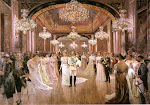
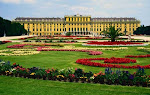
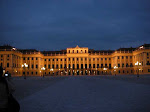
...A stunning picture of the inside of Schonbrunn Palace in Austria. You can almost feel the coolness of the marble and if you're quiet, you may even hear the echo of heels as ladies in waiting hurry down the corridor. Imagine a grand ball taking place in one of the great rooms, walking up one of the ornate staircases or peeking into the private imperial apartments. The Schonbrunn is magnificent and not unlike Versailles in France. For centuries the Austrian Royals---the Hapsburgs---lived there and played there. There is a room that is named after Marie Antoinette. Yes, she lived there for part of her life. After all, her mother was the Empress Marie Theresa. Generations later, Emperor Franz Joseph met his future Bavarian bride, Elisabeth, as she entered the country before their marriage. Elisabeth, also known to us as Sisi or Sissi, was taken to the Schonbrunn Palace.
.
.
The Austrian Royals are very interesting to read about. Lucky for us there are many generations of them to choose from. There's Empress Marie Theresa who adored her husband and her many children--it was a real love match---and she was bereft when her dear husband died. Later, there was Sissi. She had everything—almost everything—that could make a woman happy. Well, almost. Yet, she was never fulfilled; her marriage was never what it could have been. Although she was magnificently beautiful, her mother in law Sophie ran her life, took her children and did not allow her to assume her rightful place. Or was it her husband, Franz Joseph that allowed it to happen? If he had intervened on behalf of his wife, how different would their life have been?
.
.
About a year ago I met a writer who was busy studying the Hapsburgs, and had become consumed by their rich history. She was knee deep in a novel at the time, and we emailed each other back and forth, discussing the Hapsburgs, their personalities and the etiquette of the Austrian Court. I really do this in my spare time and it’s great to meet other royal lovers and writers. Her novel is now done. Her name is Jennifer Linforth, and the finished novel is called:
.
Adelrune
.

.
What Jennifer found during her study was very interesting. She read about the mental illness that ran through their genes and became curious about a female family member who was kept hidden from the public and spent her days in the secluded rooms of the Schonbrunn palace. This got Jennifer thinking, and she came up with a brilliant story. The heroines name is Adelrune, but Adelrune is different from other women. She has a form of autism. Jennifer explains the condition below for us:
.
.
Hans Asperger once said the difference between those with Asperger’s Syndrome and those not on the autism spectrum was as fine as a line drawn in the sand. His claim was we are all in some ways a bit ‘Aspergerish’. He first published his definition of this syndrome in 1944, bringing to light the traits of social isolation, intense obsession with one interest, awkward movements and mannerisms and a difficulty forming friendships. Prior to his work with autistic children in Vienna, many suffered asylums and were left to die. He viewed his patients as ‘little Einstein’s’ children who, despite their social development disorder, would possess great talent come adulthood. Asperger died before his findings and work with children became wildly noticed. It was not until the early 90’s that Asperger’s Syndrome became a recognized condition on the autism spectrum. Today, one out of 150 children and one in eighty boys suffer from autism. I wanted bring to light what life might have been like for an autistic young woman in 1866. She was far from the imbecile she would have been labeled as during this time period.
.
.
Jennifer wrote her story against the backdrop of the Austrian royal family. Adelrune, who has a form of autism, tries to do her best as she is thrust into the mayhem of the extended imperial family. Now, how awesome is that? The hero, a grand duke, is not what he seems and keeps Adelrune comfortably in the dark about his true identity as a royal. I asked her for a bit of the novel to post on my blog, and she was kind enough to give me something. Here is an excerpt featuring Adelrune and the confusion surrounding a most royal hero….
.
.
“Are you seeking your escort, Fraulein? Pardon my impropriety, but I cannot help but notice you seem as nervous as frightened rabbit. May I assist you?”
Adelrune spun and stammered at a rather handsome gentleman. “I am not a rabbit. And yes… my escort… that would be proper... but no, I am not looking for him.” She fussed with her gown too anxious to stand still. What did she know of balls?
The man followed her scans of the crowd. “If you are searching for the Kaiser, he never dances until the cotillion.”
“I care not for the Kaiser.” She pulled on a bone of a hoop. “I am looking for Duke Algrasser—my escort—so I can be certain to avoid him and the grand duke of Styria, so I can be sure I do not.”
A servant walked by balancing a silver tray.
“Champagne?” The gentleman lifted two flutes and handed one to her.
Adelrune jerked back. Champagne? Yes… she heard of this curious drink. Hesitantly, she accepted the thin crystal glass. Pale yellow liquid bubbled and shimmered in the light. She could not tear her eyes away from how it sparkled. Lifting it to her nose, the bubbles shot straight behind her eyes, making her ears tickle. The gentleman laughed and touched the flute to his lips.
“The Grand Duke?” The man sipped. “You are acquainted with his imperial highness?”
“No, I am acquainted wit his royal highness and I am rather fond of him. I know no one of imperial rank.”
Adelrune sipped as well, avoiding the man’s skewed expression and raised brow. The sweet champagne made her curl her lips into her mouth. No wonder the aristocracy enjoyed life. She took another taste.
The din of the ball fell away as Adelrune relaxed. Small glances over her flute allowed her to observe the ladies and gentlemen around her. Hardly as regal as them, she felt a bit insignificant in such opulence. She lifted her shoulder. What did it matter? She was in Kaiservilla, by the command of the grand duke!
“Shall I have the pleasure? Is your dance card full already?”
Adelrune took another sip of champagne. And to think Becca did not believe her when she said Klaus would love her openly. The gentleman to her side leaned it to her, jolting Adelrune out of her inspection.
“My what?”
“Your dance card.” He indicated the small book and lead dangling from her wrist.
Adelrune stared at it. She wondered what such an accessory was; the letters on the front were foreign to her. The man gestured for it again and with a bit of hesitation she handed it to him. He scrawled in it.
“Tell me, what are your favorite flowers?”
Adelrune blinked. What did that have to do with dancing? More champagne met her lips.
“Edelweiss.”
“Rather lofty for a cotillion bouquet, don’t you think? You will have to settle with roses from me for that dance. No man can gather enough edelweiss for a bouquet.”
“The grand duke of Styria can.”
“His imperial highness? Gathering edelweiss?” His laughed bounced across the marble.
“No. His royal highness. Truly sir, I suggest you keep things straight lest you look like a fool.”

.
.
Okay, okay...back to the blog. Great huh? Don't you feel like you were there with her? And doesn't Adelrune have a will of her own? I'm happy to say that right now Jennifer's manuscript is being seriously considered for publication. Nothing is definite, but I have no doubt Adelrune will find a publisher. The story is unusual but compelling. I think Jennifer Linforth's name is soon going to become much more recognizable to the public. Not only will Adelrune certainly be snapped up shortly, she has recently sold another novel to Highland Press. It's called Madrigal, and it’s the continuation of Phantom of the Opera—so the girl is no novice. I don't have any other details about Madrigal, (you can find them on her blog and website) but I'm sure when it's released it will do very well... and I wouldn't be surprised if Adelrune was published at about the same time.
.
.
Jennifer has explained to me why she loves the Austria of the mid 1800's. I can totally understand her fascination because I, too, love anything royal. I asked Jennifer to write down for us what fascinates her so much about the time period. Here is what she said:
.
.
The world is growing weary of that most costly of all luxuries, hereditary kings.
—George Bancroft
.
It was the softly seductive voice of Uwe Kröger, a star of the German stage crooning out “Die Letzt Tanz” (The Last Dance) that lured me to Austria. Kröger played the role of Der Tod (Death) in the musical sensation, Elisabeth, as beloved in Germany and Austria as Phantom of the Opera is in the United States. While it was a story of Sisi that whet my curiosity about Austrian history, it was the life of sadly retarded Kaiser Ferdinand I of Austria, Apostolic King of Hungary and the last crowned King of Bohemia that sealed my fate…
.
.
Susan asked me to blog about why I am drawn to Austrian history. I’d love to say it is the sexy allure of the Hussar uniform. I simply cannot resist a man in tight red pants with a fraternal sash strapped tightly against a well sculpted chest, but it goes deeper than that. The Habsburg history is as proud as it is shameful, as glorious as it is humble, as sane as it is insane—literally.
.
.
Many identify with Elisabeth of Witteslbach the Kaiserin of Austria. She never anticipated the crown of Austria —that right belonged to her sister Helena, but who was to refuse the Kaiser? Ruled by an overbearing mother in law, she was the picture of sympathy. But Sisi’s history was troubling and disturbed. Many novels and movies I stumbled across depicted a sweeping romance between her and Franz-Josef. But the more I studied Franz-Josef, the more I sympathized with him over Sisi. Here was a man who had no choice but to grow into an emperor. Follow his life to that of his son—a man drawn to the plight of the commoner, determined to see Austria move forward into the 20th century, but repressed by an ancient duty that bound him to his bloodline, the Catholic church, and the thoughts of 600 Habsburgs before him.
.
.
The passion for their family name and such divided views for the future of their country, drew me to the Habsburg family. And sitting on the throne during one of Austria’s most bloody times was a man of little brain, but apparently great heart. Reading about Ferdinand and the history of mental illness and epilepsy in the Habsburg family made stories roll through my mind. I stumbled upon the history of an archduchess severely retarded and condemned to live in the secluded areas of the Schonbrunn palace. I was already a ‘branded’ author with a pending series depicting the life of a madman. Music was a theme in all my works as well. I could set fascinating stories in the backdrop of The City of Music and center them on a royal family begging to be brought to the foreground. Mention Austria/German history to someone of my generation (I am 36) and we instantly blurt, WWII. But what of WWI? What of Sarajevo? What of the Prussian War? What of the Habsburg curse…
.
.
I grew up learning about the English monarchy. As an author I am surrounded by fellow writers who set historicals in England and Scotland. Face it— England and Scotland sell. But it is not the ISBN that lures me to be an author, it is the history. And since I always colored outside the lines, I am proud to be a writer bringing to life the Habsburg history--tragic, romantic, adventurous, proud, and unrivaled in its resilience.
.
.
…I think she described her fascination well. She's really got me thinking about the Hapsburgs...and perhaps she has stirred something in you too. There are many, many wonderful authors...but I find it unusual to find one who truly loves the royals in such a way. When you love something, you make it come alive. The love you have for the subject shines through. For those of us who adore the royals and dream about them, I think we have something to look forward to...now that Jennifer is on the scene. I have no doubt that her work will be very entertaining. I'll keep you posted as to when Adelrune will be available and perhaps sometime in the future she'll give us a longer teaser. I hope so, because I just loved it. Sorry folks, I can’t ask her to give away all her secrets now.
.
.
And a little about Jennifer Linforth. She lives off the brisk coast of Maine with her husband and daughter Abigail, who is only 15 months old. Besides finding the time to write with a toddler around, she also teaches environmental education at a local museum and is also a ranger—yes, a ranger!—at Acadia National Park. Her weblink is
http://www.jenniferlinforth.com and her blog: http://jenniferlinforth.blogspot.com Her primary blog—From Idea to Publisher is found on her Live Journal: http://madrigalist.livejournal.com. She can also be reached via myspace at http://www.myspace.com/jenniferlinforthauthor.
.
.
I wish I could tell you that Adelrune will be available next month for purchase...but, I can't. Sadly, we royal lovers will have to wait a little longer to read her rich story of love and mental illness in the secret world of the Hapsburgs... Personally, I can’t wait. Oh, and if you have any questions for Jennifer about her novel or about Austrian royalty, just ask…and we’ll get the answers posted promptly.


Sunday, March 02, 2008

All she wanted was to be a mother....


Imagine being engaged, promised or betrothed to be married at 10 years old? And then being married at 14 years old, to another teenager, who happened to be the heir to the French Throne. That's what happened to Anne of Austria.
.
.
On November 25, 1615, the teenagers, both royals, married. Anne was then the wife of Louis XIII. They say that the couple consummated the marriage quickly. But, for a variety of reasons it appears there was long stretches of time that the royal couple were not intimate. Could it be that Louis was unkind to Anne? Perhaps Anne missed her homeland and her family.
.
.
During the 1620's, there were rumours of pregnancies. A pregnancy was a must for the Bourbon Line. The couple must have a male child. It's recorded that Louis himself told an ambassador that his Queen had four miscarriages. In thinking about this young girl, fair, with a sweet smile.. about 20 years old, I feel for her. Not being able to get pregnant is enough to throw the strongest of women into a depression. If you add in the possibility of more than one miscarriage, how tragic for this Spanish Princess. What pain she endured. She must have wondered why she couldn't conceive or carry a child. At times she must have feared being sent back to her homeland. If Louis had wanted to...well, he could have acted to have the marriage annulled.
.
.
Louis's younger brother wasn't loosing sleep over Queen Anne's infertility. If she didn't produce an heir, he was next in line to inherit the French crown. The Queen's marriage wasn't hostile, but it definitely wasn't pleasant. That we know. Anne traveled to the different royal residences, prayed, enjoyed the theater very much---she prayed more---and she enjoyed eating. And she loved sweets. Sounds like us, don't you think?
.
.
She wasn't the most popular Queen and she knew it. She continued to pray about her infertility. and it wasn't only Anne that prayed. Many of the religious of her day prayed for her. While the faithful prayed, there was scandal, gossip and Anne was even suspected of conspiracies against her husband. None of this could have been easy for her. To make things worse, she had been married now 20 years---yes, 20 years--and still there was no child. You have to imagine that in her heart of hearts, Anne was near to giving up. She was in her thirties. It would be rare to become pregnant at that age. In the 1600's, she was considered old. Her marital relationship wasn't the best as we know and obviously that brings its own problems. And even somehow, if there was some miracle...would she have a boy? And if she did have a boy, would he even live? Child mortality rates were very low.
.
.
November and December of 1637 were interesting for several reasons. In December, we know that the royal couple spent at least one night together under the same roof due to an unexpected storm. (Surely there were more as well.) And in November, a monk in Paris claims to have had a vision. He claimed that the Virgin Mary appeared to him, telling him that the Queen would indeed become pregnant and that he should inform her of this. The monk sent word to the couple.
.
.
When Brother Fiacre, the monk, finally met personally with the King and Queen several months later, Anne was ecstatic. She was pregnant! Her doctor had confirmed it weeks before. It was a miracle, a miracle! It appears that the Queen felt it was so. Whether it was a miracle or not...I certainly do not know...what a wonderful story! I can almost imagine her joy and happiness. At age thirty six, she was carrying a baby, finally. She must have been on cloud nine, or whatever they called it in the 1600's. It was generally thought by all that this baby would be a lucky child, protected by God.
.
.
The baby that was born on the 5th of September 1638, was the famous Louis XIV. He was certainly a lucky King, a great King. But we're getting ahead of ourselves. At that point, on that warm September day in a room that overlooked the river Seine, there was a healthy Dauphin born. The birth was witnessed by many of the Court. To say there was rejoicing would be an understatement. As the afternoon wore on and the witnesses left, Anne rested. It would not be stretching the truth to say that the fragrance of flowers flowed through the open windows of Anne's room as she laid in bed that day, looking at her robust son. No doubt she feel asleep exhausted, but with a smile on her face.
.
.
Anne adored her son. She spent much time with him, although it was not the court etiquette of the day. None of that mattered to her. She played with him and took him outside. Her baby was considered very beautiful and she enjoyed fussing over him and combing his hair. He inherited her soft, warm brown curls. Her joy was compounded when she gave birth to another boy named Phillipe two years later. She waited half her life for these miracles that had eluded her for so long...so she didn't waste a moment.
.
.
She adored being a mother and the children came to her often. Little Louis loved Anne and formed a very close attachment to her, as most boys do. And it did not fade. This attachment remained with Louis. Although Anne loved both sons, she clearly adored her eldest. Did Anne show him this preference to prepare him for his future role? We can only guess. But whether the three of them shared a bath, played, shared dinner....or prayed together... the time they spent together was special, sweet and lasting. Anne gave them a real childhood and a feeling of safety. She was their constant. They didn't see their father nearly as much as their mother. And the brothers played as brothers do...laughing sometimes and fighting at other times. It was evident to all at court that these boys were the joy of her life.
.
.
And they said she couldn't do it.
.
.
Well done, Anne!

Friday, February 15, 2008

A New Year


I happened to come across a couple of books that looked worthwhile--royal books, of course--and thought I'd share. "Charlotte and Leopold" looks interesting---Charlotte was the daughter of the Prince Regent and Caroline of Brunswick--and should have been Queen and would have been...if she hadn't died during childbirth. Talk about a nation mourning! It was devastating to England when she died--everyone was grief stricken, similar to the way people grieved when Diana died. And although Leopold wasn't a favorite of the royals, she adored him and he cared for her deeply. They lived at Claremont, a huge home, which was filled with happiness and activity. It was there that she died.
.
.
The other book is about "Marie Therese" who was the daughter of Marie Antoinette. You dont hear much about her, but it appears someone has done a book. I can't even imagine the poor girl's pain...going on without her brother and mother and father. But, she did.
Another daughter I wonder about is Hortense, daughter of Josephine Barnoparte. But I do have a book about her, so I really should read it so I don't have to wonder anymore. But....time....do we ever have enough time?
.
.
Speaking of time...since the end of November I have been working 6 days a week at my job. I work at an insurance company and we were about as busy as I've ever seen them. I didn't have a minute to read, write, critique or blog. After hours on the computer, who wanted to read or write? I managed a few hello's on my space, and on my email. I got through half of "The Diana Chronicles" by Tina Brown...not bad...not bad. Its a bit sensationalized, I thought. But if you have a chance to read it, I don't think you'll be too dissapointed.
.
.
This is the first week where my life sort of got back to normal! I dont usually work 6 days. So, after a bit of rest I've started surfing, and I came across a wonderful royal group called WORLD OF ROYALTY. It's a group for royal lovers---obviously---but whats nice about it is that you can set up your own royal page just the way you like it, and get involved in different royal groups and topics. Its not exactly a forum...its sort of a my space sort of thing for history and royal lovers. Here's the link in the event you want to check it out.
.
.
How did I find this wonderful little place? I was surfing one of the sites I like called Royalty n u --- and it looks like the owner of that group started this one. If you'd like the link to Royalty n u, its http://www.royalty.nu/
.
.
I'm so happy at last that these busy months are over! I've missed my royal books and sites and all my writing friends. I'm so, so proud of a couple of my friends who've made some very nice sales this year! 2008 is going to be a good year...I can tell. I'll wait till their books are out before I say anything. (One is scheduled to come out in April!) I've also been tipped off about a big, delicious, juicy biography that will be coming out probably in 2009. I was lucky enough to talk with the author and give her my opinion on the personality. Not trying to be secretive here... I'll share it with you as soon as it's ready to come out. I got to read a bit of it and believe me, I was in my happy royal fog for days. You will be too.
.
.
What am I reading now? I'm trying to finish "The Diana Chronicles" and I'm also reading "Born to Rule" by Julia P. Gelardi.
.
.
And "The Other Boleyn Girl" will be coming out in the movies soon. Phillipa Gregory is the author of that masterpiece. The story is fiction...but it should be good. The stills from the movie look excellent. Overall, I think it'll be a wonderful year for those of us who love the royals...

Saturday, November 10, 2007

Russian Romance


Sometimes you just feel like reading something nice...just a little bit of romance to break up the day or to allow yourself some light reading. You know...that 'nothing' sort of reading that just makes you feel good. The Romanov's are good for that, and I'll tell you why...Nicky and Alix (the Russian Tsar and his Tsarina) were madly in love and don't let anyone tell you otherwise. If you strip away all the details of the government of the day, take away some of their numerous servants...and put them at Livadia, which was their home at the sea...well, you have sort of a normal family. They didn't have the white picket fence, but, oh, who cares---they had the stone white walls around the palace!
.
.
Alix had loved Nicky for years and years and probably wouldn't have married anyone if she hadn't married Nicky. And she almost didn't! In her own mind, the differences between her religion and his were insurmountable. She couldn't be crowned as Empress of Russia, knowing in her heart that she did not believe in their religion. It was wrong, wrong and wrong. So, she kept telling Nicky no. This went on for the longest time. Now...here you've got this Princess who has a handsome Tsar begging her for her hand...and she loves him too...yet she can't say yes. You have to give her a little credit. Her beliefs were very strong and in her heart she could not lie to God. It's a long story, and there's much more to tell, but finally, at a family wedding in Coburg, he got the news he had been waiting for. She said YES. I have a book here with some of their very private love letters to each other, and diaries. I thought I would share some of them...so you can see them as the real people they were...excited, in love, missing each other... so, we'll start with Nicky.
.
.
Coburg, April 8, 1894 ~ 'A wonderful, unforgettable day in my life - the day of my betrothal to my dear beloved Alix. She came to Aunt Michen after 10 o'clock, and after they had talked, she and I had our discussion. God, what a mountain has fallen from my shoulders; with what joy I have been able to delight dear Papa and Mama! I spent the whole day in a haze, not quite knowing what had happened to me!'
.
.
Nicky, Diary - April 11, 1894, Palais Edinburg, Coburg ~ 'Slept splendidly in Uncle Alfred's rooms downstairs to the left of the entrance. The weather was much warmer than in Coburg, everything was in full bloom and the scent wonderful. After coffee with the whole family, sat with Alix answering telegrams. Her attitude towards me has changed so much during the last few days, I am utterly entranced. This morning she wrote three sentences in Russian without a single mistake! At 11:30 we went together by char-a-banc to Rosenau, where her late parents, a brother and sister, are buried in a pavilion.'
.
.
Nicky, April 12, 1894 ~ 'Woke up to a beautiful day. Went with Alix to have coffee with the Queen; now I must call her Granny. The infantry played under my windows like the dragoons. Wrote telegrams with Alix. At 11 0'clock went to church with the Queen. Looked at the group photographs taken before and after Ducky and Ernie's wedding. Alix and I went together to Rosenau by char-a-banc. Quite a number of people of people have gathered to play lawn-tennis and drink tea. Sat with my delightful bride. With Aunt Marie's permission, have moved from the castle into the cottage in her garden, next to the villa where Alix is staying. I am in Alfred's rooms, as he left today for Potsdam. Its very cosy, convenient and, most importantly, near to her.'
.
.
Nicky, Diary- April 15, 1894, Good Friday - Coburg ~ 'At 10 o'clock went with Alix to breakfast with the Queen; it is so strange to be able to drive and walk alone with her, without feeling at all embarrassed, as if there was nothing unusual in it! The weather started to deteriorate, but we nevertheless set out on foot to the antiquary and to the wicker shop, where I brought a number of baskets for mushroom picking as well as a chaise-lounge for the camp. Alix gave me a ring. How funny it seemed to put it on my finger for the first time! Went with my darling bride to Rosenau by char-a-banc. We gathered flowers along the way and walked up to the house. Learned that the Queen would remain a further day because of the brisk weather in the Channel! During the service I carried the Shroud with Uncle Sergei. Dined with the Queen at 9 0'clock. Afterwards there was music, while some people sat in the adjoining room and talked. Returned home, sat for a further hour with dear Alix, she is calm and happy. Poured with rain.'
.
.
Alix to Empress Marie, her future mother-in law, April 18th, 1894, Palais Edinburg, Coburg ~ 'Darling Motherdear, Nicky tells me I may call you so, oh thank you so much - you are too kind and good to me. How can I thank you and dear Uncle enough for the magnificent present you were so awfully kind as to send me. It is much too beautiful for me! It gave me quite a shock when I opened up the case - saw those beautiful stones. I thank you ever so much for it, and kiss your hands most tenderly. I feel so proud to have your lovely order, and am most grateful and thankful for it, and the sweet egg and dear letter - all touched me deeply. Only two days still, and then darling Nicky and I have to part, it makes me feel miserable, but I am sure that his little Motherdear is longing for him. You will let him come to England this summer, won't you, because it would be too hard to be parted so long, and Grandmama is looking forward to his visit so much. He has quite won her heart, as he has of all those who know him.'
.
.
Nicky, Diary - April 20, 1894 ~ "Awoke with the melancholy feeling that the end had arrived of our soul to soul existence. After coffee I went with Alix to visit the widowed Duchess, who lives quite alone in her castle on the hill. At 12:45 I went with Alix to the station and said goodbye to her. She is going to Darmstadt and from there to England with Victoria (her eldest sister) to visit the Queen. How sad it seemed when I returned home! As if on purpose the weather had started to clear up and the sun broke through. Yes, it's no fun without her!'
.
.
Nicky to Alix, April 20, 1894 - this sad Wednesday - Palais Edinburg, Coburg ~ 'My sweet darling beloved Alix! Oh! It was too awful saying goodbye like that, with a lot of people looking on from all sides! I shall never forget the sweet sad and yet smiling expression of your angelic face looking out of the window as the train was beginning to move! To know that you had to spend 9 hours in that small compartment nearly by yourself - was cruel to me and especially the thought that I was of no help any more! The coming home was more than unpleasant and when I came into my room, where you had just been a few minutes before, I could not keep back my tears. But then oh! what a delightful surprise - on my table in the bedroom there lay a note from you, my darling little girl. Thank you and thank you for the soothing comforting words you wrote in it. Oh! really those few lines did me good!'
.
.
Alix to Nicky - April 20, 1894 - Darmstadt ~ 'My own precious Nicky Darling, I am lying in bed, but cannot go to sleep before I have written to you, as speak alas, we cannot. Oh, how I miss you, it is not be be described and I long for the two hours all alone with you. No goodnight kiss and blessing, it is hard. But our thoughts will meet won't they? Your dear telegram made my heart rejoice, and I have got it lying near me. What a delight it will be to find your letter in Windsor. And there you are rattling away in the beastly train, whilst I am comfortably installed in my own 'sweet house' - It reminds me all so much of last week - how glad I am that you have been here and know my rooms a bit. I want you badly. Forever and ever your dear photo stands before me, and makes me feel lonely. I shall write tomorrow from Windsor.'
.
.
Alix to Nicky - April 22, 1894 - Windsor Castle ~ 'My own precious Nicky dear, I have just arrived and had breakfast with Granny. How it reminded me of Coburg and made me miss you more than ever. But there the delight t finding your sweet letter for which many tender kisses and thanks for the flowers. I am going to put them in my Bible and Prayerbook- they smell still excellently. The comfort of having your letter is great and I don't know how often I have read it in these few minutes and covered it with kisses. How I miss your kisses and blessing. The journey went off well and the crossing was splendid, not a movement and I do not feel very tired. Granny has a tiresome cough. The whole journey I kept your coin in my hand and played with it and looked at the photo - a little comfort. Not only that I miss you, but Ernie too, everything reminds me of a few weeks ago where we were here together and I feel quite lost without him. Granny tells me she has written to you - she wrote to me even to Darmstadt. Aunt Beatrice is going up to London for some function, so Granny, I and the children will be left to ourselves. Your letter has made me too awfully happy. I also feel shy to express my feelings...we shall have to conquer this weakness, don't you think so?'
.
.
Queen Victoria to Nicky - April 22, 1894 - Windsor Castle ~ 'Dear Nicky, I must thank you very much for so kindly sending me that splendid copy of your Travels which I shall value very much. I need not say how much my thoughts (have) been with you and my sweet Alicky (Alix) since we left dearest Coburg and I am sure the parting from her will have been very painful for both... I shall watch over her most anxiously and carefully that she should get rest and quiet and do all to get strong which she has not been for some time.'
.
.
Nicky to Alix - April 23, 1894, Gatchina ~ 'Good morning my own precious one! I am aroused from my slumber, which had been disturbed at 3.0 in the night by an insolent bat. My man, my dog and myself hunted the beast for nearly half an hour before we at last manged to catch the brute in the corner.'
.
.
Alix to Nicky - April 30, 1894 - Windsor Castle ~ 'Oh, Nicky sweet, do you really not get frightened when you think what a creature is to become your wife, will she not drive you mad? I shall do all in my power to get my legs in order till next year, (Alix had much pain in her legs from a bad back) but it is not so easy and you who are so fond of walking, oh dear, what could I do? The post has brought me nothing from you, let's hope tonight a letter may still come, or else I shall be so sad.'
.
.
Nicky, Diary- May 2, 1894 - Anichkov Palace, St. Petersburg ~ 'I am sitting in nothing else but my shirt, all the windows open though it's night...I ran about through our future apartments in the Winter Palace (a killing sight), returned home for 5 minutes and drove to Ella (Alix's sister). We two dined together...Ella gave me some excellent ideas about arranging our rooms- and we talked away till 11. I was glad to see her as of all the sisters she reminds me mostly of my sweet darling. Isn't it so?'
.
.
Nicky to Alix - May 8, 1894 - Gatchina ~ 'Papa is always so dear and kind to me - today I asked whether he would allow me to go over to England in his lovely yacht the Polar Star - and he at once consented, adding he was sure I am delighted not to have to go through Berlin! I should think I am mad at the idea of going over to see my sweety by sea and on board that ship. Oh you ought to see her - she is a beauty and so comfortable, but the best of engines - she steams 18 knots easily an hour! '
.
.
Alix to Nicky - May 10, 1894 - Harrogate (the baths in England) ~ 'I had my first sulphur bath this morning, it did not smell lovely, and made my silver bracelet, which I never take off quite black, but that one can clean with the powder one uses for cleaning up one's silver things. ' May 11, 1984 ~ 'Before slipping into bed I am going to read your sweet letter over again, and it makes me happy. Oh, what an indescribable joy it is, one is loved and longed for - and I pray on my knees that I may become worthier of your great love. Oh, my Nicky, my own sweet Boysy, dear God bless you now and for ever. I could cry for love for you. Not only do I miss you but I long for Ernie, who used to be always running into my room at every hour of the day - und ich gonne es ihm vom Herzen (and I was always happy for him to do so). A kinder, dearer brother never was... And beloved Papa, oh, it is terrible to know that I shall nevermore see him in this world. I miss him daily more and more especially now that through you my heart is so full. Tomorrow my little sister May would have been 20, think only, quite grown up. Sweet little Child that she was. But my love I think I better go to bed, as my legs have been so painful today and as I had my first bath, it is also getting on for eleven.'
.
.
Personally, I'm so glad they didn't have telephones in those days. If they had, we probably wouldn't be reading these very private things! If you enjoy the Russian Royal Family, take a peek at the Alexander Time Machine. It has everything a person could want on these royals...pictures and descriptions of their private rooms, wonderful archives, stories, personal accounts and diagrams of the palaces...as well as lots of information on their children. It's one of the best sites out there. http://www.alexanderpalace.org/palace/ Go ahead and hit it when you're ready! You won't be sorry.

Saturday, October 27, 2007

Sometimes...No words are necessary...


Wednesday, October 24, 2007

A Day in the Life...


Have you ever wondered what it would be like to spend a day in the life of a Queen? Or a princess? I have. I'm sure you're not surprised at that! But...let's sort of follow her around for a day...and kind of hang out. Of course, the kind of day she'd have would vary from country to country and from decade to decade. And then again, there are Queens in their own right, and Queen Consorts, which are Queens that are married to a reigning King. A Queen in her own right might be Maria Theresa of Austria--the mother of Marie Antoinette. She reigned and worked. A consort would be a Queen such as Queen Charlotte, who married the reigning monarch Mad King George.
.
.
The Queen might be awakened by a maid or lady in waiting, and served a tray of tea or coffee, perhaps with fruit, and she might sit up and read the papers. The drapes would be opened, and after a time, her clothes for the day would be brought in (or a selection of clothes). If she was staying in the palace for the day, and no visitors were coming, she might slip into a pretty dress, but nothing too formal. She would be assisted in her dressing by a maid. The Queen would also sit down at her dressing table and would begin her toilette, which we would call 'putting on our face.' The Queen would be assisted with any makeup she might wear and her hair would be done for her. Hair ornaments would also be added, and a few jewels...perhaps a necklace and earrings.
.
.
After that, she would be accompanied by a lady in waiting to the dining room for breakfast. Oh, did you think the coffee and fruit was breakfast? Oh, no. The King might accompany her as well. A footman would open the dining room door for her, and another uniformed footman would pull out her chair. If she had children and they were old enough they might join their parents for breakfast, and sometimes a senior lady in waiting would be invited to stay to dine. If there was a private secretary and a royal doctor, they also might be invited. It varied day to day.
.
.
After a leisurely breakfast, the Queen would return back to her sitting room or office and begin her work. If she was a reigning Queen, she would be assisted by her personal secretary and usually her senior lady in waiting...
.
.
As far as ladies are concerned, all ladies that assisted the queen were called "Ladies in Waiting" although there was a hierarchy of ladies. The senior one might be called "A Mistress of the Robes" and the next senior might be "Lady of the Bedchamber." Then there were assistant ladies of the bedchamber, maids of honor, etc. The senior lady in waiting would see that the Queens wishes were taken care of. If the Queen needed to appoint a lady in waiting, the Mistress of the Robes would send the letter to the lady in question. She would handle the matter and let the Queen know the details. The Mistress of the Robes acted as sort of a secretary. If the Queen wanted to see someone in the palace, a senior lady would tell a lesser ranking lady, and the person would be fetched. Also, ladies worked for a month or two at a time, and then returned to their families. At any given time there was usually between 4 to 8 ladies at court. Some kept the Queen company, and might read with her, and often the ladies chosen were noble ladies, such as Duchesses or Countesses...or women who were used to court life. It was also a plus is they could paint or draw, ride, sing, play an instrument or speak a second language.
.
.
During her morning she would sign official documents, read important news and letters, dictate or write responses, and sometimes receive visitors. Her private secretary would give her the work in order of it's importance and usually had comments of his own to clarify the situation for her. Sometimes he might make suggestions.
.
.
After a long morning of work, it would be time for luncheon. Again, she would be accompanied to the dining room, or if it was nice weather lunch might be laid out on a private terrace. One or two of the Queens ladies would eat with her--after all--they were there to keep her company. Luncheon wasn't usually too heavy. In the royal household, though, every meal was served on fine plates and the food arranged beautifully.
.
.
After eating, the Queen might be ready for a break. She might wish to take the air. (That's what they called sitting outside or taking a carriage ride throughout the grounds). Fresh air and light exercise were always recommended. If the weather wasn't fair, she would retire again to her sitting room area, and perhaps read her personal correspondence...the royals were very fond of letter writing. They couldn't be too familiar with many and so it meant a lot to them to commit their feelings to paper and send them off by a special courier to their relatives. Some couriers regularly went to other countries and some delivered the royal letters to recipients inside the country. She might do some needlepoint, drawing or read by the fireplace. Sometimes in the afternoon they were visited informally, or they received visitors formally. There might be a meeting arranged, or even an afternoon drawing room. Lucky for today, the Queen has none of those!
.
.
Before dinner, there would always be some time to rest. The Queen might be visited by some of her children or her husband...or sometimes lie down on her chaise. A lady in waiting might read to her, or the Queen might want quiet time. While she enjoyed some quiet time, the servants were busy getting things ready for...dinner.
.
.
Her evening dresses would be brought into her dressing area for her to look at. At the appropriate time, she would go to her dressing table and begin her toilette again. Her toilette would be different for dinner. Her hair might be piled high on her head, letting tendrils fall, and jewels might be added to her hair, and for larger dinners with many guests a tiara would be chosen. (And tiara's do hurt, ladies!) The Queen might do some adjusting here and there...but her lady would do her hair and jewels. Then she would be helped into the dress most appropriate, which was usually a formal one with much lace, ruffles or beading, made of the finest fabric. (All her clothes were made just for her, and hand stitched.)r
.
.
For all intents and purposes, we'll say that tonight will be a small dinner...just family and a few quests. The more senior servants would join them, and so their party might consist of 10 or 12 people. The King and Queen...or the Queen and her consort would assemble outside the dining room, and the family, guests and servants would line up according to precedence. Once assembled, the door would be opened and they would take their appropriate places, according to rank and precedence. If it was a larger dinner, some guests might already be seated.
.
.
Courses were many. Candelabras were lit, and fine china was laid out. Tables were adorned with flowers and sometimes menu's. It would be appropriate to talk to the guest on your left and your right, giving equal time to each. Dinners were formal, and etiquette was stiff. Footman usually watched the Monarch, and once he or she was done with a course, they would begin taking away the dishes...to the dismay of some. If the Monarch was a fast eater--and some were--you were out of luck, and so you learned to eat fast!
.
.
After dinner amusements were just as stiff as dinner. Guests would retire to the drawing room for cards, games and conversation. The Queen would mingle throughout the room, making sure she spoke to each person for a short bit...and she would speak to them first. Talk about the weather or riding or a person's general health were proper topics. A guest would never say, "I heard you had terrible stomach pains the other day. How do you feel?" That would be quite improper. They might say something like this: "I had heard Your Majesty was feeling indisposed earlier this week. I do hope you are recovered." And even that would be a bit too familiar! Only those close to her would say something like that. So, conversation was generic and polite.
.
.
Sometimes there might be a band and dancing at the palace, depending on the amount of visitors that evening. On other nights, there might be a performance by a singer, or a concert or play given. They also attended the opera on some nights. They did have balls and grand balls, too...but for tonight we'll keep them close to 'home'.
.
.
If the Queen was having a wonderful, gay time, she might be inclined to stay up later than usual. No matter how tired the guests were--and the Ladies in Waiting--they would not retire until she did. Once the Queen (and her husband) left, often there would be sighs of relief, and guests would plop down on a couch or chair, tired, with painful feet! Being invited to dine with the Crown was an honor indeed...however, because there were such firm rules of etiquette, it could be quite grating on the nerves! Guests were known sometimes to slip away into another room to sit down for a bit! Remember if the Queen stood, so did everyone else. If the Queen was sitting, the others could too. Some courts were stiff and boring and long...others were more relaxed and gay.
.
.
Back in her bedchamber, she would be assisted with undressing and her dresser would take care of putting her precious jewels back in their safe place. Her hair might be brushed, too. If she was keyed up and not tired, she might want to read for awhile or ask a lady to read to her. Sometimes the Queen might pen a letter or write in her journal, or dictate a letter to her lady. A fire would be lit, too, to keep the Queen warm during the night.

Alone in her bed (with fluffy pillows and thick quilts) the Queen would blow out her candle at the bedside and lay down. Invariably, she would think about the day past, and more importantly, the day ahead. Nothing was left to chance. Each day and week and month were planned in advance and rarely was there anything spontaneous on the menu. The Queen might be excited about the next day...perhaps they would be traveling to a favorite vacation home. Or maybe it was something more tedious....like a levee or drawing room or even a ball! Some of these things could be trying. The Queen would have to stand on her feet for a long period of time, or, shake a thousand hands easily. But, everyday was something different.
.
.
Hopefully, the Queen would have sweet dreams and be looking forward to something the next day! She is Queen after all, and so she shall make sure it is so! She will decree it! Her eyes would get heavy and she would relax. Sleep would come soon.

And YOU! You're only a visitor who's been graciously allowed a peek into her day! So, I think it's time to leave the Queen's bedchamber now!........Quietly, please......

Sunday, September 16, 2007

Writing about those Queens...


What is it like to write about Queens? For me, it seems like the natural thing to do. It's rather fun. Entertaining. Yes, those books to the right are mine...and that's just some of them. I picked up my first book on a royal at age 23, and couldn't put it down. It was called "The Woman He Loved." I couldn't get over that book--that story--which chronicled a King, who fell in love with an American, divorced woman. And it came to be that he gave up his Kingdom for her. After reading that I got hooked. Really hooked.


From there my interest grew and I'd bring home three and four biographies at a time and read. At first I started with that King and his immediate family and then I went to his parents, and then their parents---and then Queen Victoria. I bought my first Queen Victoria book while in England in 1988. I began reading the Stanley Weintraub biography in England on the train from London to Leigh-On-Sea, where my Great Aunt lived. And I bought more royal books...and even more royal books and tapes while visiting Buckingham Palace. I hurt my back lugging home those books to the U.S.--crates of them! But back in '88 you had no choice...we didn't have Amazon.com.UK!! You grabbed the books while you could.


And I had relatives sending me information from the papers in England, and I went to book sales whenever I could and grabbed anything that looked like it pertained to nobility or royalty---it didn't matter what country the royalty was from. And now I have hundreds of books. And even now I'm not satisfied.


I've studied Josephine...and her daughter Hortense....Marie Antoinette.....Princess Diana...the Queen Mother...Queen Mary and Queen Alexandra and all of their children...Queen Victoria and all of her children and her aunts and uncles and the Regent and his daughter Charlotte...Russian Royalty...Princess Grace...Henry's wives...some of Spain's royalty, and now I've got a real old bookstore near me and I've found so many wonderful memoirs of ladies-in-waiting...servants...dignitaries and writers and poets to go along with the royal books. And of course I study families such as the Devonshires...and homes like Chatsworth.


Today I sat with four books on Queen Victoria, and a fabulous memoir and studied the timetable in the months right before she assumed the throne and right after. Why? Why, you ask? In this case its because I've got a work in progress---a novel---and it's important I get my facts straight because she---Queen Victoria!!-- is in the novel and the characters are interwoven into her life in the months just before and after Victoria took the throne. And the poor, young Queen was pushed to her limits...there was such pressure around her, and who could she really trust? (Oh, if you only knew!) There was practically no one. It's amazing really, that she did as well as she did during that beginning period on the throne. She was conceived and born to be a Queen and once she was---that was it. There was no looking back. She grabbed those reigns and did what she had to do. She had a will of her own and knew her own mind. She pushed away her forceful, domineering mother and took charge of not only her life, but the Kingdom.

The novel is about done. The fictitious characters I've added seem very real to me...and blend in wonderfully with the new "Court" at Buckingham Palace and Windsor Castle ...some characters help Victoria in her new role...other characters are out to hurt and to see what they can get. But no matter who they are, they strive to keep their dirty laundry...er...private. It just wouldn't do if the Queen knew everything about the friends she is closest to. But what is the cost of keeping these secrets from her?

Next month I'm going to a big writing conference and I'm quite excited. It's being held in New Jersey and many big, big names will be attending. I'm sure that I will learn a lot and make some new friends. Luckily it's only about 35 minutes from me so I can commute.


I do get requests from readers and authors....can you suggest a certain book on a Queen or princess? What new books are coming out? What do I know about Princess so-and-so? Do I think Queen X is interesting? And I enjoy responding and helping when I can. I don't know why I do what I do..but I must examine everything and find out every little detail. For some reason I really need to know what happened behind the "facade" of royalty. I search and search and read between the lines. I need to find the hidden feelings of the royals and what they really did in their private life. Things like this----something cute about Prince Albert...he had an odd sense of humor. If he was in a room with Queen Victoria and perhaps a couple of his children, and a maid or footman happened to trip over the rug---there would be gales of laughter from the Prince-- once the servant had gone-- and the whole family would collapse with laughter. I mean, the man thought it was the funniest thing! Now, I'm not sure if that silly piece of information will get me the best table in a restaurant or even make me a large sum of money. But, if I put it all together...well, maybe it might amount to something. It may be small--mind you---but it could amount to something.
.
.
I have one friend who loves to try to stump and test me. "How many years did so-and-so reign??" or "Explain WHY the throne went to a woman when there was a man in the family when the King died?" or "Explain the duties of a lady of the Bedchamber? Did they work in the bedroom?" he he...no, the Ladies don't really work in the Queen's bedroom or bedchamber at all. A maid would do that. For the longest time, though, I imagined the Lady of the Bedchamber did work in the bedroom!! Well....we all have a learning curve, don't we?
.
.
Last night while I was researching, my husband made dinner and gave me my plate while I sat on my bed with my books. Later, I handed him the plate(with the food gone) and he took it. I said, "This is an important part of the research. I must feeeeel the part."
.
.
He lets me get away with a little bit.

Monday, September 10, 2007

Her Majesty


A majestic picture... a moment in time, captured.
This portrait was taken when Queen Elizabeth returned to Buckingham Palace after her coronation ceremony. They say--truthfully---that she had a massive headache when she took off that crown. Wearing such a heavy crown takes practice and it's not particularly fun. (Not that I would know personally...but I have my sources
.
.
This woman became Queen when she was a young wife and mother. She was in Africa with her husband Prince Philip---she had loved him from the time she was a young girl---and she got the terrible news that her father had died. Luckily, packed deep in her luggage was her black mourning clothes which were always packed, just in case. The night before his death, the King had followed his normal routine--he read in bed and had something hot to drink. In the morning, they summoned Queen Elizabeth, the Queen Mother and gave her the news of his passing. She was bereft. Oh, she put on her Queenly composure for her daughter and the world...but she was utterly shattered for quite some time.
.
.
As the new Queen and her husband flew back to England, without doubt she was overwhelmed by memories of her father and mother and their family life. It is well known that the King and Queen adored their daughters, Elizabeth and Margaret Rose. Right before she married Prince Philip, the King told her in a letter that it would be the last time it would be "us four". It had always been "us four"---traveling, spending time at Royal Lodge in their garden, planning the garden, playing with their animals. The family spent cozy times together...times that I'm sure Her Majesty even now remembers with a sweet fondness. They were the ultimate, perfect royal family.
.
.
I have a book which is rare, written by Marion Crawford. Marion was a trusted governess to the young Elizabeth and Margaret Rose. She was with them for many years in their youth. To their horror, she published a tell-all book. It was one of the first. It was quite devastating to the family...not that there is really anything shameful in it...nevertheless, they had trusted "Crawfie" and this was unexpected. From then on, whenever someone betrayed them, they'd say, "They're pulling a Crawfie." To them, "pulling a Crawfie" meant they were betrayed by someone trusted. There's no need to tell you what's in the book--since Her Majesty is alive and she might read this....well, she might...I just wouldn't dare breathe a word. She's a noble and classy woman and I respect her and I just can't in good conscience pass on secret, gossipy things about my Queen. Since I'm English, she is my Queen. As a matter of fact, the Queen's physician operated on my great grandmother Talbot in the late 1800's after a carriage accident. My great grandmother was blind after the carriage accident and could only see shadows. I think it was Queen Victoria's physician that attended to her. But she didn't feel sorry for herself...she raised 6 healthy children in the country. Her hearing was so good that the children couldn't even lift the lid off the cookie jar, no matter how hard they tried!!
.
.
Back to the Queen, though. You aren't here to read about my grandfather trying to steal cookies...
.
.
There's a picture called Three Queens, which was taken during the King's funeral. It's a picture of the new Queen, the Queen Mother and also the King's mother, Queen Mary. They are standing together, with black veils over their faces. It's rather chilling....sad.
.
.
Luckily for Queen Elizabeth, her father spent much time with her, at his desk, going over the work of the sovereign...explaining what was expected and teaching her things. She loved and trusted him and learned from him. And I think he loved teaching her. They had a wonderful partnership of love and respect. Although the new Queen was probably not feeling quite ready to take on the heavy duties of the monarchy, her father undoubtedly had taught her well and I think she felt comfortable as she began her duties.
.
.
Queen Elizabeth took much comfort from the rituals she was used to. There was Sandringham at Christmas and Balmoral in the summer. She spent many weekends at Windsor and the family has a set of apartments there. She still spends many weekends there and Prince Philip oversees the grounds. (no, he doesn't really do the work!) I'd love to be a fly on the wall there...or even a servant for that matter. I wouldn't mind polishing the furniture if it meant I could peek through some of the rooms...and maybe skip down the massive hallways and staircases. One day I'll get permission to visit the Royal Archives....I will! I have my mind and heart set on it. If I can get there, I'll produce something beautiful for sure. I don't want much in life...my family...a couple of bucks, a few books...and a long, long trip to the Royal Archives!
I do worry about the Queen these days. She's had a lot to cope with these past years, with the death of her sister Margaret and her beloved mother. The Queen, obviously, has only so many close people around her which she can really be herself with and I'm sure the loss of these two family members so close together has been very difficult. Still, she is surrounded by a large and loving family and like any matriarch, I'm sure she is adored and enjoys spoiling her grandchildren just a bit.
.
.
She is still a vision---in her pastel suits and hats and her gowns and jewelry. She is always perfectly put together and rather elegant, if I do say so myself. As you probably know, she loves her privacy and her dogs. She loves riding and adores her horses and horse-racing.
If all Queens could be as Queenly as she---we'd have monarchies all over the world. Someday, the world will look back at her reign and she will be seen as a glittering gem, with a perfect countenance, wise... and I daresay she is quite loving and caring. She's got one of the hardest jobs in the world.
.
.
She never really gets a vacation, you know!

Saturday, September 01, 2007

A Decade...


I was sitting here thinking of what to write---I had the Marie Antoinette things laid out, and then I grabbed a book about ladies in waiting---but then remembered, its been a decade. And since its been ten years since her death, I'd be a terrible Writer of Queens if I didn't remember this beautiful woman, the woman we remember as Queen of our Hearts--Diana.
.
.
We now know that when this picture was taken, at Highgrove--the family's country home--that Diana was simply miserable. There were many times she cried in the loo, or a locked room---and little William would pass her tissues under the door. Diana has said for all intents and purposes the marriage was over after the birth of Harry, yet---they still posed for pictures, still tried to be the happy family---at least to the world.
.
.
It was at about this time that Diana began spending long, long stretches of time in their home in London, at Kensington Palace. Charles preferred Highgrove. Diana's sanctuary was her bedroom and sitting area, filled with her many stuffed animals...even a large hippo, which was placed by the fireplace. She and the kids loved to kick back, sit on the couch and watch movies, and eat on tray tables...they just had lots of fun. Those kids were everything to her and those children helped keep her sane. She had so many pressures that we cannot even imagine. Everyone was picking at her, everyone wanted a piece and she never knew who she could trust.
Her rooms were filled with all her favorite pictures of family---her sitting room had long, flowing chintzy drapes at the windows. There was a desk in there and couches...she loved it in there. That's where she entertained her children and friends---and even received her designers and secretary to discuss the days events--or look over clothing selections. The Diana in the above picture was just beginning to evolve into the Princess we knew in the 1990's.
.
.
There is a new book out, which most of you probably have heard of by now--The Diana Chronicles. I have not read it myself, but will of course. But there are many, many others and I have read them all, even the very first one put out by Prince Charles's valet, back in the 1980's. Since then there's been so many tell alls---and they all paint a slightly different portrait. Andrew Morton's book has to been given serious credence, I think, because Diana herself was so involved in them. However, we are reading in there what Diana wanted us to know and not necessarily the whole unvarnished truth.
.
.
One of the best books I've read, and it was very long and detailed, was the book written by Sally Bedell Smith. Diana's blue blood went back approximately 500 years---and being from a noble family, she knew her worth. There are the royals and the nobles. Diana was from a noble family. Some nobility have as much royal blood in them as the royals do. Smith went into that aspect of Diana's family history as well, and you come away with a better idea of what it felt like to be a Spencer. Being a Spencer was almost like being a---well, a Devonshire! The castles that the royals inhabit--Sandringham and Balmoral--- are much smaller and considered mere cottages as compared to Althorp House, the seat of the Spencers. And in the nobility circles---many of the royals now---well, let's just say they are considered "new" by noble standards...only being in the family 50 years or so. But of course, I say that with the deepest respect for the Crown. I'm just passing on what I've read. And Sally's book chronicles the marriage, and the behind the scenes machinations of both Diana's camp and Charles's, all the while letting you know what the average reader like us was hearing at the time...but what might have been really happening and why. And yes, this is the book where Sally says that Diana had a personality disorder. Oh, who will ever know, and do we even care at this point? Still, the book is packed with the most fascinating information and so, if you haven't studied her at all and are interested, I'd say try her book, "Diana". (I'll let you know about Royal Chronicles after I've read it.)
.
.
I'd like to think that if she had lived---and oh, don't we wish she had!!---that she would've really come around and been comfortable in her own skin and a bit proud of her accomplishments. Her face would be lined a little more, but her smile still radiant. Her hair might have been a little shorter and looser---or maybe a little spikier in places and colored with light golden blond streaks, her make-up delicious, her skin still radiant, her gems brilliant. She'd be giving everyone a run for their money, and she would have been involved in so many charities and issues---she'd be jet setting all over the world on these missions. And I'm not saying she was a jet setter. But she would have been busy with important humanitarian issues--perhaps in a way that Angelina Jolie has sought to do. I think she would have spent much time abroad---in America, for one, because she was SO accepted in America. But enough of that. It appears her son's are doing much of this in their own quiet way.
.
.
Did you know that Diana loved to clean and tidy? She was very good at it, too. She liked order. Before she married Prince Charles, her flat was immaculate. In later years she hated being alone--eating alone--sleeping alone. And she was alone a lot. She had her favorite close friends whom she'd phone and talk for hours and at the end of her life she even ventured into the kitchen to make a few dishes and she was quite proud of that. She was very good about writing thank-you's and she did them the minute she returned home from an event. She thanked everyone for what they did, no matter how small. She really was a lady in that way...and this was something instilled in her by her father..."Diana, have you finished your thank you's?" he'd
say.
.
.
It's been said that she was estranged from her mother at the time she died. I know that she adored her brother, but was hurt by him before she died---she had asked him for something---for a room or an area alone at Althorp--and he had declined saying that if she were to come, there would be her security to deal with and the press and he had turned her down, at least temporarily. Maybe he would have changed his mind and they would have worked that one out, but she died before they could. And there was some tension at times between she and a sister---her sister was married to one of the Queen's secretary's and so that sister probably heard things about Diana from a different vantage point and so it was hard for Diana to relax and be herself around that sister. But all in all, she loved her family. But--she was hurt. She felt she had no one to turn to--no one--that there was no where in the world she could go to get away and be by herself and be protected--no one to lean on. That's all she ever wanted...to be protected, and to have someone safe to lean on. She felt abandoned.
.
.
And she may have been...abandoned...in a sense. You would never think of someone as beautiful as Diana as being alone. Lonely. Who could she trust? Who was really there for her?
.
.
If she only knew how loved she really was....
.
.
Hopefully, looking down now,(if she can) she is fully aware of the love there is for her, and she does not feel abandoned any longer.

Dark Skies Over Windsor Castle


It was on a cold and stormy day like this, at Windsor Castle, in December of 1841, that the servants and inhabitants of the Castle, and the family--the royal family, wandered the cold grounds in worry and worked in silence inside.


Inside the Blue room located near the family's apartments, was a man of 42 years of age, struggling to get better, laid up in bed, hot and sweaty. His daughter read to him, his wife stroked his head...his daughter played music for him, the doctors ministered to him. He would rally and be better...and then shockingly, turn feverish again...and the doctor's were not sure what to do. His wife whispered to him in german---sweet things--and then, when she was overcome--would leave the sickroom and go for a walk outside, in the cold air under grey, stormy skies, with the stark light grey of the castle stone hurting her eyes---well, she had been crying, and it hurt to look up.
.
.
Below is the story of that time in December. I wrote this for The Royalist, and would like to share it with you now...

Victoria's Lasting Tribute to Her Beloved Albert

Written by Susan Flanders for the Royalist

On March 15th 1862, Queen Victoria laid the first stone in the foundation which would one day be her final resting place. It was an act she undertook for all of the new homes and buildings which would come to be of such importance in her life.This particular stone was laid with a heavy heart as it was being built years earlier than it should have been.
.
.
Never, in her wildest dreams, would she have ever thought she would be laying the stone for the house that would hold Albert’s remains for all eternity. Her beloved Prince Consort had died in December 1861, having being seriously ill for several weeks. Although aware her husband was very sick, it was an understatement to say that his death came as a shock to the Queen. Days, even hours earlier, the doctors had believed the Prince to be making progress. Victoria had stayed with him, sitting by the bed, writing that she "found him very quiet and comfortably warm, and so dear and kind, {he} called me "gutes Frauchen" and kissed me so affectionately and so completely like himself, and I held his dear hands between mine." To the relief of the whole family, most especially the Queen, Albert seemed to continue to rally.
.
.
The doctors were convinced the Prince had typhoid, possibly contracted due to the poor drainage system at Windsor Castle. However, it is a diagnosis which will likely never be fully confirmed. Victoria and Albert’s daughter, Princess Alice truly adored her father. Throughout his illness she sat by his sickbed, hour after hour, day after day, reading to Papa and playing the piano in an attempt to help soothe his ordeal. Queen Victoria was never far away, gently wiping her husband's brow, holding him in her arms, or whispering loving words in German. She rarely left Albert's side, except to get a few hours of fitful sleep or to take in a little exercise. On the evening of 14th of December — a date that would, for many terrible reasons, haunt the Queen forever — Albert became weaker.
.
.
The Queen was summoned to his bedside, as were their children, although four of the nine royal offspring were missing. An increasingly distraught Victoria couldn’t believe what was happening. It couldn’t be. He was supposed to be getting better. After all, at 7am on that very morning she had been informed that the Prince was "better than he has been yet" and that "there is grounds to think that the crisis is over." Kneeling before her darling husband, the only man she had ever truly loved, Victoria watched in increasing horror and fear as Albert's life began to ebb away. How could the doctors have been so wrong? She had another eight children to raise; baby Beatrice was not even five years old. She needed him!
.
.
All too soon, however, Victoria's worst fears were confirmed. Inside the Blue Room at Windsor Castle, Albert looked peaceful one moment and then, according to Victoria herself, "two or three long but gentle breaths were drawn, the hand clasping mine and...all, all was over...I stood up, kissed his dear heavenly forehead and called out in a bitter and agonising cry: "Oh! My dear darling!" and then dropped to my knees in mute, distracted despair, unable to utter a word or shed a tear!".The man born Francis Albert Augustus Charles Emmanuel, Prince of Saxe-Coburg-Gotha, the somewhat brilliant man who had truly revolutionised not only Victoria's personal life, but her reign too, was gone. He was just 42 years old. How could Victoria ever, ever go on without him? He had been her dearest friend, her husband, lover, protector and advisor.
.
.
Observers from the time suggested the Queen, in shock at the turn of events, was taken out of the Prince's bedchamber and helped to a sofa in the Red Room, where she laid down and uttered in despair: "There is no one to call me Victoria now." She spent the rest of the night lying with Albert’s nightshirt in her arms, baby Beatrice sleeping at her side. But Victoria herself did not sleep. Her life was in turmoil. She did not want to live. She could not cry.
Now, on March 15th 1862, here she was, laying the rock which would be Frogmore. It would be their mausoleum, and every waking second left to her would be spent making it beautiful for Albert. In some measure, the plans and building of the mausoleum brought the Queen some peace. A hugely religious lady, Queen Victoria believed he was waiting for her on the other side, and she set her thoughts "on the things above." Building Frogmore was important to the Prince Consort’s memory and equally as important to Queen Victoria’s great need to begin the healing process. She had personally chosen the spot for 'our' Frogmore, north of Home Park near Windsor Castle, just days after his death.
.
.
Only after she made this decision did she agree to leave Windsor and return to Osborne House on the Isle of Wight, to grieve and remain secluded. Osborne was the private house which Albert had built for her. But it was more than that: it was a home.Once here, however, the Queen was consumed with thoughts of Frogmore and spent many hours working on the plans for the beautiful place she would now build for him...for them. In the years to come, the aging but still mournful Victoria spent many hours inside Frogmore, it helping to soothe and comfort her. When she entered the ornate building, she was reminded of Albert at once and felt at peace with the world. It was a unique place; not gloomy, simply quite beautiful. Even on the day of the wedding of her son and heir, Edward, Prince of Wales to the beautiful Princess Alexandra of Denmark, the Queen sought solace inside the Royal mausoleum. Prior to the wedding, the Queen took her son and future daughter-in-law inside the mausoleum---telling the bride and groom 'he' would have approved of the marriage. At the end of the day, the final guests having left Windsor, the Queen took refuge once more inside the building and "prayed by that beloved resting place, feeling soothed and calmed
.
.
The Queen's mourning continued for many, many years (perhaps too many years). Finally refreshed, Her Majesty finally returned to the role of England's Sovereign and mother to the Empire. It may only be a building to some, but the mausoleum at Frogmore gave the Queen the rest she needed and the strength to go on. Knowing there was Frogmore, and that it was just theirs, and theirs alone, Victoria had no fear of life, nor of death. The essence of Frogmore is a glimpse of Victoria herself. To visit Frogmore today is to gain, over a century and a half later, a glimpse into one of history's most remarkable royal love stories, the like of which we may never witness again.


Saturday, July 21, 2007

Baby grows up


Beatrice knew in her heart that sooner or later her dear Mama---Queen Victoria of all Britain---would give in, eventually, and let her marry the man of her dreams. Wouldn't she?


As I said in an earlier post, the Queen was furious with Beatrice for putting her in this position! She simply couldn't do without her daughter. Didn't everyone understand that? Beatrice was her confidante and she relied on her immensely for so many things. She had the weight of her world on her shoulders, and dear Albert, her husband was gone. Her nerves had been through so much. She couldn't live without Beatrice at her side.


And Beatrice dreamed of her new love night after night, knowing deep in her heart that she had met the man of her dreams, and oh, how could she ever give him up? She didn't want to hurt Mama in any way but why couldn't Mama understand that all Beatrice wanted was what the Queen herself had wanted and cherished...a man to love her and a house filled with children?She wanted to marry sweet "Liko" as he was known---the handsomest of the Battenberg brothers. And what was more, he loved her, too.


And thus began "The Battle Royale"---if there ever was one---this was it. Mother and daughter did not speak to each other. Oh, Beatrice did what she needed to do...she continued to arrange the flow of her mother's day and announce her mothers visitors and did her obligatory secretarial work, but when mealtime came, she sat in silence and ate quietly. She would not speak to her mother unless it was something of the utmost importance, most likely involving matters of the crown. There was no more small talk or gossip or even smiling. If Victoria wanted her to stay that badly, then fine. She'd stay. But she'd be as quiet as a mouse and as lifeless as could be. Needless to say, Beatrice must have been depressed and anxious over the whole situation. It was tearing her to bits. As much as she loved her mother, she was angry, too.


As for Victoria, her nerves began to be strained to the breaking point. During meals, her daughter sat quietly and stoically, ignoring her and barely speaking to anyone. As the days and weeks wore on, Beatrice became a changed woman. The Queen was distressed and quite sick over the whole ordeal. However, Beatrice had to understand that the Queen could not be familiar with anyone else. She needed a confidante and daughter that she could be intimate with. Her other daughters were off and married, some of them in far away lands. And the Queen was so lonely without her dearest husband Albert who had died so young. And he really was her dearest Albert...never had a husband been so loved. (And I mean, really!) What was Beatrice trying to do to her? If she allowed Beatrice to leave Britain and marry, she would not have the strength to go on. Her life was a series of pressures and obligations and she could not bear it.
.
.
Do you know this went on...not six weeks...but nearly six months? I don't know many people--or anyone for that matter, that dared to push Victoria's emotions to those limits. But finally the good Queen remembered her sweet, lovely days when she was a newlywed and the times she spent with the one man who she could truly be herself with...Prince Albert. She loved him passionately, wholeheartedly...what would her life have been without him? And...thinking like this...she realized that her baby just wanted the same thing...a man to adore her and a family. Did Victoria have the right, just because of her position, to insist her daughter have less than she herself had had?
.
.
She summoned Beatrice and offered a compromise....She could marry Henry of Battenberg---"Liko"---if she promised to remain in England at her side as her confidante, with her new husband and any children that might arrive in the future. Nothing could change. Beatrice's husband and any children would have to stay with the Queen always---and travel with her to her different homes and to London. Beatrice, ecstatic, agreed quickly to the idea and Liko also jumped at the chance. And so they were engaged and a lavish wedding on the grounds of Victoria's house on the Isle of Wight was planned. There would be tents on the grounds, flowers and a royal menu par excellence. Although Victoria was a bit nervous, despite herself, she enjoyed the planning and it did her heart good to see her daughter so contented...and began to become quite fond of Liko herself. The picture on the top left is of the royal wedding gown laid out and prepared before the wedding day. That's what things looked like in their home. For once, Beatrice felt like a Queen. Victoria even allowed Beatrice to wear her very own wedding veil....a sacred thing...and even joined the festivities of the wedding---to the degree that Victoria allowed herself to do that sort of thing. She was a bit teary when Princess Beatrice and her new husband pulled away in the carriage to begin their honeymoon. But, she stoically wiped her tears away. She would not let anyone see her emotion. These feelings would be recorded in her diary.
.
.
Beatrice had 3 children with Liko, and the eldest child was named "Ena." Ena was a "favourite" of the Queen's...(that' what the English Royals called it---favourite). Victoria had several grandchildren that she was particularly attached to....but I won't tell you all of that now....we can save that for another day. Queen Victoria allowed the three darlings to run and play in the palaces to a degree that she had never allowed her very own children to do. The children were allowed to be somewhat intimate with their grandmother, which was quite rare. Royal protocol was lessened just a bit when it came to her three grandchildren. Pictures of the Queen during this time show her content...and rarely did she smile, but when she was with the young family, she did smile more and she became more relaxed.
.
.
Beatrice stayed extremely close to her mother, so close that at times she felt she neglected her children just a little. Truly, she was a woman caught in the middle and this was difficult for her, but she managed to handle herself with a dignity and grace that--- really--- has not been widely recognized, but should be. Victoria was really at her best then...a tough Queen, seasoned, but very fair...and her legacy at the end of her life--- I think--- is in much part due to the devotion of Beatrice. There is not that much information on Beatrice...but, there will be a book coming out in the future on her. It's called The Last Princess, and it is not available in the United States yet.(sigh) but it is available to those of you in the UK. (Yes, I've thought of getting it from the United Kingdom!)
.
.
Beatrice simply adored her husband--and Victoria found him quite "amiable". I daresay---and this is my opinion only---that these happy years reminded Victoria very much of her young married years with Albert. There was laughter and joy again in their homes again, and Liko, in his own way, looked after them in a sort of protective way which I think the Queen needed badly.
.
.
Ah....fairytales....they really do come true.
.
.
There's some sadness in their story...but, I am not here to make you sad. I'm here to tell you that Beatrice got the joy that she feared would elude her forever...loving a dear man...having her children...and doing the job she was born to do for her beloved "mama'.
.
.
And Ena grew up to be a beautiful girl, and a Queen too. She also carried the hemophiliac gene.
Perhaps on another post I can talk more about Beatrice and Liko, and their life together. I'm definitely not finished with Beatrice yet, that's for sure. I've got Beatrice on the brain!
.
.
Speaking about what's on the brain, I'm working on a new, long piece for the Royalist. I'm hoping it will turn out good. I'll let you know when it's ready.
.
.
I've also been having a grand time on my new My Space page. I worked on it several weeks before I started adding friends. Its a blast!! I love it! Why am I always the last one to find out these things? LOL... My page has a royal theme (how did you ever guess?) and it's really been lots of fun. I also added so many new friends to my Bebo page.
.
.
One of my dear friends sold her second book---and I just saw the cover!! Its sooo pretty and once its closer to publication maybe I'll ask her if I can post some information on it here....or perhaps even interview her or something. She loves royalty, castles and all of that too---and her novel is filled with a knight, a castle and a lot of love.
.
.
Several writers have written to me to ask if they can link up with this blog---silly! Of course you can. But it's very sweet of them to ask and I'm honored that anyone would like this enough to link to it. Someone also wrote me to ask if they can interview me about writing about Queens....I don't have all the details yet, but that's such compliment. I don't know much really---except about Queens, that is.
.
.
It's a lazy Sunday afternoon and my little Prince and my King are food shopping and I am supposed to be cleaning up a little instead of writing about Queens!
.
.
Please let me know what you'd like to read about and I'll try to write about it.... I was even thinking of adding an extra page or two for fiction stories & excerpts on my "Queens novels"....its just a thought. Oh, do I dare?
.
.
Psssst.....That picture on the top left...it's really Ena's wedding dress laid out. But I didn't want to spoil the story...you get the idea.
.
.
And in case you're wondering what Princess Diana's private little nickname was...(you probably haven't been able to sleep nights wondering, I know!) ...only family and very close friends called her this...they called her "Duch."
.
.
Stay cozy in your castles this week and treat yourselves like the Queens you are...


Friday, July 06, 2007

Peeking In

What is it about those castles, those princesses, those lives...that makes us want to peek in? What is it about them that draws us in and makes us wonder? Is it the idea of the fairytale...do we want to make sure they lived happily ever after? Will they teach us how? Or could it be the gold and the jewels and the beautiful things that we don't have and wish we did? Maybe we want to be the ones behind those doors looking out.


For me, it is the constancy of royalty that intrigues me and soothes me. They are true stories, but for me, they never end. They are there no matter what. The long, drawn out stories of their lives are there on rainy days and lonely days and happy days and fearful ones. I can depend on them to be the same and never change. It's one thing in this long and changing thing we call life that doesn't go away. All the details are firmly in place and they will stay that way forever. The written word has captured a moment and feeling in time. That's what I like. That's what I crave. I want to be there with them in that moment. Maybe that's what you like too. I guess we all have our own reasons...but, certainly they entertain us all and let us believe in magic a little while reminding us of things that will always be true.


I'll be writing another piece for The Royalist soon and I'm sitting here with biographies and large picture books scattered all over the room in different piles. And I'm thinking. Something on Queen Mary might be nice...the younger Queen Mary when she was known as Princess May of Teck (that's the present Queen's grandmother) or maybe something on the 5 daughters of Queen Victoria. (Oh, they were a lively bunch!) I guess I'll have to think about that over the weekend and decide. Hopefully, it will turn out well. Maybe I'll do a two parter this time.


I have to say that I'm humbled at the response I've received from the writers and readers I've heard from recently about how much they are enjoying the blog. Who would have ever thought? Not me. It took all my courage to throw my work out there, but I'm glad I did. If nothing else, its entertaining. I'll just stick to my formula which is to write about what I know. The majority of these posts are composed as I sit on my bed, from memory. I don't want them to be seriously historic or boring. I just like to relate what I think were some of the more interesting points in their lives, as people. Yes, they had their roles to play in history but they were people too---held to a higher standard than us at times---and somehow they survived it.


I saw the memorial concert for Diana last week and she would be so proud of her boys. In the closet next to me are a collection of old Royalty magazines, with little Wills and Harry on the front. Some of them are even before William's time. It's so sad that Diana's life was cut so short. I know we still miss her. She will never be replaced. What a legacy she left us. She was such a sweet little dynamo, wasn't she? What a Queen she would have made! I still love reading about her and of course, have all her biographies on a special shelf in my bedroom. I'll never forget hearing on the radio, on my birthday---that Prince Charles was engaged. Later that night we saw her on TV in her blue suit, right off the rack. Even then I made a mental note of when the wedding was. I knew that London was 5 hours ahead of us here in the states and I knew I'd have to get up early to watch. I think I got up about 3:30 in the morning. I think I'm the only person who "watched" the calender go from the end of February till July that year. Even way back then I was a royal lover. I couldn't wait for the wedding. I hope sometime within the next five years to be waking up at 3:30 to watch William or Harry's wedding.


Speaking of getting up early---that's what I have to do in the morning. (luckily not at 3:3o---I'd only do that for Diana!) But, I should be signing off. But before I go---do you know the special nickname that Diana's sisters (and a few close friends) had for her? If you don't, I'll tell you next time...
And I won't forget to tell you what happened with "Baby" Princess Beatrice, and if she was able to pull off that wedding or not.


Wednesday, July 04, 2007

Baby


She was the baby of the family and her story is one of my favorites. This is a picture of Princess Beatrice on her wedding day, wearing her mother's wedding veil. Her mother, of course, was Queen Victoria. Beatrice was the only daughter---and there were many---to be given the privilege of wearing Victoria's own veil of honitan lace. (I'm doing this from memory...so I hope I have that right, about the name of the lace!)


It might seem at times that whenever you read about the royals, Queen Victoria's name pops up somehow. That's because Victoria really was considered the "grandmama of Europe." That's because her relatives---and then her children and grandchildren went on to assume many of the thrones of Europe.


But back to Beatrice...the baby. As much as Victoria moaned about being pregnant and loathed it---in the end, the pregnancy and birth of baby Beatrice was to begin one of the fulfilling relationships of her life. It all began on a chilly night in December, 1861. It was the night that young Beatrice's father died in the Blue Room at Windsor. But this just wasn't any father...this was Prince Albert, Queen Victoria's adored--and I mean adored--husband. The night he died, the agonized and grief stricken Queen, picked up her youngest child and carried Beatrice to her own bed, laying with her throughout the night, holding Albert's nightclothes and clutching their youngest child. There was something special about Beatrice...in some ways she was the nearest link to Albert. Beatrice comforted her. (I can write about the night Albert died in another post, but I warn you in advance, you may need some kleenex.)


The baby had been a happy and carefree child, full of enthusiasms--but, as Victoria's world crumbled on that terrible night, so would Beatrice's personality. Never again would relatives see the confident, bubbly personality of the old Beatrice. After that night it was buried away forever, and she became guarded. I'm sure it was partly shock--seeing her distraught mother and family--but it was also partly in response to the years of mourning that went on in the daily life of Victoria's court...crying, hushed voices, tension, melancholy, melodrama.


Each elder daughter took her turn in looking after her mother. They acted as liaisons, secretaries and precious shields, keeping away the world. Eventually, Beatrice rightfully assumed her turn. Because Beatrice was the baby, there was no question that she would stay in this needed position. Whilst her other sisters married, marriage for Beatrice could not be a consideration. Quite frankly, Queen Victoria simply couldn't do without her. And that was that.


Beatrice lived a quiet life, in rooms near her mother. She was at the Queen's side from morning till night, reading her letters, taking dictation and notes, keeping callers at bay and keeping her dear mother company. Beatrice was very good at it too. She naturally deferred to her mother's authority and her life was filled with all of the things that a loving companion would naturally do. She was protective, caring and genuinely adored her mother and enjoyed being with her, for the most part. She accompanied her from Buckingham Palace to Windsor Castle, then to Osborne House and we can't forget Balmoral Castle in Scotland. For the most part they traveled to and from the latter three homes as Victoria was much too nervous to spend too much time in London.


But there always comes a time, when...well, things change. And things changed in a big way for Beatrice. In her late twenties and already a confirmed spinster, she met Henry of Battenberg at a large family event in Darmstadt. She fell in love instantly with the very handsome Battenberg...all the Battenberg brothers were known to be very handsome. And that was that. She could be as stubborn as her mother when it came right down to it. Well, she was her mother's daughter, wasn't she?
She was absolutely determined to marry the man of her dreams and I must say---Queen Victoria was even more determined that things would stay just the same. There would be no marriage, the Queen decreed. She simply couldn't do without her---she would not survive it.
But, as you saw above, the Princess was in her wedding dress and so, did it happen and if so, how the heck did Beatrice pull it off? When I tell you, you won't believe it.
But I'm getting tired now. We'll leave that story for another day.

Tuesday, July 03, 2007

Osborne; A Queen's Favorite Home

This was originally written and published on The Royalist.

Written by Susan Flanders
Tuesday, 04 April 2006

Victoria and Albert were married only several years and their family was beginning to grow slowly, with the addition of their children. The couple had restored not only dignity to the crown, but were an endless source of fascination for the nation.The young family represented stability and the young Queen took very seriously the many tasks undertook in relation to her role as Head of State. She was supremely happy with her husband and her private life was becoming more and more precious to her. More than anything, what she wanted was a normal family life...just like everyone else.


Whilst the Queen loved the excitement of being in London, she noticed that Albert was much happier while they were in the country. It seemed to soothe and invigorate him. It was therefore always a source of sadness to them when a visit to the country was nearing its close...yet, Victoria couldn’t often be away. Her Ministers would never hear of it.

As monarch, she had use of Windsor Castle and Buckingham Palace in London, each one having its advantages as well as its drawbacks. Windsor was much too large and didn’t have the cosiness she craved.In turn, the Palace was really not ideal for the sovereign's growing family, who felt at times as if they were living in a goldfish bowl. Even when trying to go out for a walk, invariably there would be someone there to see them. There was no privacy.Windsor was preferable, and undoubtedly the more beautiful, but both homes belonged to the Crown. Victoria and Albert weren’t free to do as they pleased.


Ever sensitive to her husband's needs, the Queen pondered this and knew that Albert perceived both places as hers, and not his. Why couldn’t they, like any other married couple, have a home of their own?One day as the royal couple were taking a walk, they discussed this at length. If the new home could accommodate their servants and the Privy Council (if needed) it might work. There must also be room for the Prime Minister and important guests, as well as the ever-present aides, such as Private Secretaries.Excitedly, they discussed the options and decided they wanted to find a property of their own, to be paid for with their own money. If this could be achieved, they would own their very own home which, as Victoria mused, "would be so nice".


The young Queen remembered a special place from her youth: the Isle of Wight. That's where Norris Castle was and she had gone there with her mother in the summers while she was young.When thinking back to that carefree time near the sea, it brought with it happy images of her dogs running near the ocean, spending time outdoors, the smell of the sea and sleeping soundly through the night. 'Oh', she thought, 'if only I had bought it years ago when it was offered to me!'Sadly, she had not.


Soon, however, the royal couple were made aware of another home for sale on the Isle of Wight called Osborne. Albert went first to look at the house and property, alone. He arrived home late in the evening and the Queen excitedly awaited his impressions. Albert was happy with what he saw, Victoria recording that he was "much pleased".They decided it would be wise to take a lease on the house for a year and, if they liked it, they could make the arrangements to buy it and make the necessary alterations to accommodate their staff, and to make it comfortable for the family.


Seeing the house for the first time made quite an impression on the Queen. After sailing across the Solvent, they approached the property. Victoria was ecstatic. Noting that it was "delightfully private" — which was very important to her — they stayed on for several days to look over the house and spent hours alone investigating the property, going through the woods and strolling along the beach, with its beautiful panorama of blue waters.Victoria was thrilled with the house and grounds and felt it was paradise.


The burden of duties on herself and Albert was causing both to feel prematurely aged. They were tired but now, finally, they would have a place to rest and to be totally alone.What more could the Queen want?Her husband was evidently happy here, on this lush land, and she loved the bracing sea air, which would be so good for them. She pronounced that the house was "so complete and snug."


Victoria, who looked to Albert for wisdom in so many things, saw an excitement in him, an aliveness whilst he was on the property. She could see in his eyes that he loved the land and the sea, and the feeling of it all. She felt confident they would buy Osborne.Albert began to talk to her about what accommodations would need to be arranged, and spoke too about their future. He came up with ideas for the landscape and gardens and they even imagined that there might be a walk to the sea, lined by large evergreens. He reeled off the names of trees and plants that they might want to buy, and walked around the land, studying it's layout, all the time pointing out his ideas to his adoring wife. It was the beginning of a new life.


After some difficulties finalizing the sale, as well as the time it took to acquire the properties surrounding Osborne to assure their privacy, the royal couple's dream began to be realized. Albert made the purchase from their personal finances. Finally, they had their own home!The Queen's Ministers had no real problem with the idea of her "vacation" home, and Albert was excitedly working on the plans for the house. It was wonderful to see him so happy, so content and eager to create for himself and his beloved family the safe haven they needed. They would be in total seclusion.


Victoria and Albert were never more excited.There was also an added bonus to this delightful place: when sailing across the Solent to Osborne, the Queen could disembark on her very own property! About hew new home, Victoria wrote to (her former Prime Minister) Lord Melbourne: "It is impossible to see a prettier place, with woods and valleys and points de vue, which would be beautiful anywhere; but all this near the sea (the woods grow into the sea) is quite perfection. We have a charming beach quite to ourselves. The sea was so blue and calm that the Prince said it was like Naples. And then we can walk about anywhere by ourselves without fear of being followed and mobbed, which Lord Melbourne will easy understand is delightful."


Part II Below

Osborne; A Queen's Favorite Home, Part II


Albert spent much time with the architect Thomas Cubitt reviewing the plans for the new house. It was decided that it was more practical to build a new home instead of adding on to the existing one. Whilst the extensive renovations were undertaken, the Royal family lived in the large, Georgian style home — already there — in which Victoria immediately felt comfortable.Eventually, once ready, the family would move into the new, larger house, the foundation of which was broken on March 16th 1845.
It was an exciting time. Long periods were spent in London and at Windsor Castle, but as soon as they could get away to the Isle of Wight they did. Here they could oversee the plans and watch the construction of their home.Not only was Albert fully aware of every detail of Osborne's progress, he was busily designing the landscape in his mind, and in his letters to family, rendering pictures for them in pen and ink of how the gardens might be laid out.
Everything would have to be just right. The Queen would of course, need a bedroom and sitting room to overlook the magnificence of the blue Solvent, and he wanted to have the children close by as well, so that the environment would be family orientated and intimate. The close knit feeling they were striving for was unusual in comparison to what other royal families had done in the past.
Victoria and Albert chose an Italianate style for their huge, new home, partly because the view reminded the Prince Consort of Italy. The main part of the house was called The Pavilion. A tower was added, as well as a clock, which was scrutinized by Albert.Outside the Pavilion, a terrace was added which they would grow to love.
Many hours were spent there walking amongst the vibrant, colorful plants and flowers, with the waters as a backdrop. Sometimes it was a place to simply relax and converse, and at night time Victoria had the luxury of taking a stroll all by herself, or with Albert, to look at the waters which were sometimes lit up by the moon.
Inside the Pavilion was a massive staircase which traversed many floors, around which were linked many rooms. The guest rooms were situated on the ground floor, included amongst which were the expansive drawing and dining rooms. Pictures of the dining room show that it had light pink walls with splashes of gold and maroon throughout, with heavy mirrors and paintings on the wall. Gleaming, dark furniture was placed under the paintings and heavy drapes hung at the windows, allowing a view of the sea. Enormous, colorful paintings covered every wall of the rooms downstairs, and many statues of the Royal family were placed on stands in the hallways and landings of the house. The hallways in particular took on a classical feeling.
Suites were prepared for the children and their nannies on the third floor. Each room seemed to have windows, almost from floor to ceiling. To protect the children, bars were put across the windows. Just below it on the second floor, for themselves, Victoria and Albert designed a bedroom, sitting rooms and dressings rooms.
The Queen never tired of sitting near her French windows, simply enjoying the scenery or painting watercolor pictures and sketches of the views outside. Painting was a favorite past-time and the pictures she created were light, airy and done in pastel hues.The contents of the rooms were considered comfortable by royal standards, but they were far from opulent. Again, in their private quarters, Albert consumed the walls with his favorite large paintings and a Winterhalter portrait. One luxury they did allow themselves was a bathroom each, with as much hot water as they desired.
The doorways had a unique combination of the letters V and A, intertwined, which adorned the tops. The furniture was all comfortable and picked out personally by Prince Albert. There was chintz on some of the furniture and also at the windows.Victoria loved Windsor Castle, but did note about Osborne “here and dear Windsor, like night and day".
The Queen spent time working on her dispatch boxes and paperwork, while Albert would usually head outside to see about one of his many projects.Victoria was more than pleased that her husband was so happy, noting: "It does one's heart good to see how my beloved Albert enjoys it all, and is so full of all the plans and improvements he means to carry out. He is hardly to be kept at home for a moment." Yes, this was where they belonged. Victoria had no doubt about that.
A wing for the household was also added to the new home. Osborne soon became an impressive building when seen from the sea, as the sailboats and steamships moved about on the Solvent. Sometimes, while watching the dark storm clouds roll in, the Queen could see her yacht, the Victoria and Albert.Her Majesty's carriage, when it arrived, could be pulled up snugly underneath the portico, which was attached to the Pavilion. The exterior of the house was covered in a stucco-like material, made to resemble stone. It was only a 4 hour journey from London to Osborne, making it a wonderful escape for the family and far away from the rigid and formal court life they were used to.
Trips to Osborne caused much anticipation, especially for the Queen, who knew that soon she would be able to spend quiet time alone with her family, and most especially Albert. She loved having him all to herself. Once they left London, at least some of the burdens were lifted from her husband's shoulders and she knew he would relax and she could be herself.Time at Osborne allowed Victoria the intimacy she craved, a level of which her position normally didn't allow. Victoria confided: "Never do I enjoy myself more or more peacefully then when I can be so much with my beloved Albert...follow him everywhere."
It was also during these early years that the Queen swam in the sea for the first time in her life. Heaven! Many years went into the planning and building of Osborne. Guests acknowledged the attention to details within the house and its uniqueness. Visitors were usually comfortable there. It wasn’t long before the family settled themselves into a routine.
Their day usually started at around 7am. Albert got up first and headed to his dressing room where he began to work on his paperwork, focusing on correspondence, current projects or memorandums.Victoria, more relaxed, lounged in her soft, cozy bed for another hour or two. Much of the time she spent there she was pregnant.Sometimes, on warm days, they breakfasted on the terrace with some of the older children. As usual, after they ate, Victoria and Albert strolled through the grounds. Weather permitting, the Queen would sketch or, Albert by her side, spend time with their children. Sometimes they collected shells at the waters edge or explored the property.
The royal children had a large Swiss Cottage, which served as a play house, all of the contents of which were in miniature, even the saucepans.As a treat, Albert would cook his children a surprise: a German meal! He also taught them to garden, each having their own area of land and paid for whatever vegetables they were able to grow.
These were exciting times for the children, some of whom grew to have a lifelong love of the outdoors.Everywhere you looked within this royal home there was a token of love---a piece of a memory---a sprinkle of meaning---and a creation remembered. Truly, the Queen thought, we are living in a dream. It was Victoria’s deepest hope and lifelong desire that the home stay in the family for generations...a place of beloved memories and comfort to her grandchildren and their children.Monarchs have wished for many things, but they do not always possess the power to make a dream come true. Queen Victoria's dream was that Osborne would withstand the torrents of time, going on forever.Sadly, this was one dream which was never destined to be.

"Dearest Child"


One of my favorite books is one called Dearest Child. It's a book of letters from Queen Victoria to her eldest daughter, Vicky. This is her. Vicky was Princess Frederick of Prussia and later Empress of Prussia---she waited many years for her husband, Fritz, to assume the Prussian Throne and he did not reign long. After her husband's life was cut short, her son "Willy" began his reign and treated his mother with cruelty. Willy was very well known throughout Europe--he had a lame arm, shorter than the other, and kept it in a special constructed pocket, so that it wouldn't be noticed. But Willy was noticed by everyone--he was quite a character. Why though, did he feel it necessary to be cruel to his own mother?
This is where the lives of Royalty parallel our own lives--real life. Vicky suffered at the hands of her child, her eldest son. And like most mothers, she worried about him, cared for him and cherished him. She did everything in her power to heal the arm. No treatment was spared. As a young wife, she wrote to her own mother---Queen Victoria---pouring out her pain and her fears. As a mother, Victoria worried and sympthasied with her daughter and sent advice. Victoria had nine children of her own and so she wasn't inexperienced in child rearing.
The book contains letters---not so much from a Queen to a Princess, but, more as a mother to a daughter. They really loved one another greatly, and the distance they were separated made it all the more poignant and difficult. They wrote constantly to each other, with the letters being sent by a special courier much of the time. The letters are timeless. It shows that nothing much has changed between mother and daughter relationships in the last 150 years.

Let me quote some:

Victoria to Vicky, Buckingham Palace, February 7, 1858.....'I think of you so much and long to know what you are doing---but, alas! I cannot tell! I had hoped to get a telegraph, but have had none, and no one has told me what your toilette was to be these next days! Oh! this terrible separation, till one hears and knows all---it makes one so terribly fidgety and impatient.' and 'Do let Lady Churchill describe all your rooms at the Palace at Berlin and you must tell me exactly how your hours are---what you do---when you dress and undress and have breakfast, etc., for you know what we do to a minute but unfortunately we know nothing and that makes the separation so much more trying.' and 'Get Jane C. to tell me about your rooms---the railway carriages etc. Has the railway carriage got a small room to it? And (you will think me as bad as Leopold B,) were your room on the journey and at Potsdam arranged according to the English fashion? Then I see by the papers you wore a green dress at the Cologne concert. Was that the one with black lace?---You must not be impatient about all these details which I am so anxious to know, for I am anxious to know how all my toilettes succeeded? The pink ball dress as Brussels was much admired. How I do long to hear all about the King and Queen and family.'

Vicky to Queen Victoria, Berlin, February 12, 1858.....'We always breakfast a nine or a quarter past just the same as at home, then I sit down to write, speak to Doctor Wegner, then to the Baron, and usually Heinz has some question to ask about the dinner or about presentations. At twelve everyday we have received deputations and addresses and presents from different towns, it becomes very tiresome at last; they all make long speeches, and poor Fritz has to answer them which he does quite wonderfully. He has such a command of the language. I have never heard him hesitate once. As soon as the business is over we dine out of the town and then walk in the places where we are least tormented by being run after. Our usual dinner hour is at five, as I ever take anything between breakfast and dinner, and then nothing afterwards. And I find that rather pleasant; the gentleman and ladies sit or stand and talk a little after dinner, and then we usually do back to our room and go to bed about half past ten or eleven when there are no balls or opera or parties, but that is a rare case.'

Victoria to Vicky, Buckingham Palace, February 15, 1858.....' Your dear letter of the 12th and 13th arrived safely this morning, with heaps of other letters and newspapers so that I could hardly get through them but yours are always so well written, so well expressed that independent of the happiness of hearing from you, they are a real pleasure to receive. I am happy to think you have a little leisure, for that cutting up of your day is very bad for every thing, for the mind as well as the body. The cold I am sure, dear, helps to keep you so well and brisk---quite as much as the hours (which I can't bear to think of, though I wish particularly to follow them when we visit you)---for you will recollect how you used to shiver when it was damp and mild---whereas the bright, dry frosty, cold always did you good, warmed you and made you less chilly. I think it hardly safe to from 9 &1/4 till 5 without anything? I would advise never to do it if you felt faint or hungry---but take a biscuit or dry crust. You take, I suppose, a cup of tea at night? Only remember that the better you become acquainted with the family and court the more you must watch yourself and keep yourself under restraint. No familiarity---no loud laughing. You know, dearest, how necessary it is to have self control, tiresome as it may be. Kindness, friendliness and civility but no familiarity except with your parents (in-law).'

From Vicky to Victoria, Berlin, February 15, 1958.....'Dear Mama, I did not think you would miss me as you do, I was often such a plague to you; but sweet is the thought that one is missed by those whom one loves so passionately, so intensely as I love Papa and you, and the dear children and the whole of England. It pains me that you should still be sad. If you knew how nearer I feel drawn to you, my beloved parents; instead of feeling myself cut off from you, I feel that I am serving you both and proving my deep gratitude to you, in doing my duty here and in imitating your great and glorious example. I may I hope be of real use to you. How happy that would make me. '
And I think they said it all.

Sunday, July 01, 2007

The Queen's Heir


I wrote the following article some time ago and it was published on The Royalist. However, since it's in an area which cannot always be accessed, I decided to copy it here.

Victoria and Albert’s Heir: Raising Bertie
The Raising of a Prince of Wales


By Susan Flanders

Victoria looked down at her second born child on November 9, 1841, just hours old and saw a beautiful baby boy with ‘large and dark eyes, a good high forehead, a pretty but rather large nose, a nice little mouth and chin.’ At Buckingham Palace, the Queen rested after the delivery
This baby, who would be named Albert Edward, was the first male heir born to the throne in over 70 years. All throughout Britain there was jubilation and excitement as guns were fired, crowds cheered and Londoners celebrated and sang “God Save the Queen.” Victoria was pleased that a male heir had been born, and thought that if the boy had inherited any of his dear father’s traits and qualities, he would do well.
The young parents entrusted their new baby to the royal nursery where he met his older sister, Vicky, called “Pussy” by the family. Although the baby was well taken care of, over time Victoria found herself growing uneasy about the child and having anxieties. He just didn’t seem to be doing the things that little Vicky had done at the same age. Albert also noticed the difference in his progress. The parents were concerned, but for the time being kept their fears to themselves.
As the children grew, more siblings arrived and before long the nursery was bustling with activity. The Queen was quite happy with the appointment of Lady Lyttleton, who would oversee the nursery. Albert found himself involved in all things relating to the children---from their schedules to what they ate. Their education started very early. Meals were basic and spartan and there would be exercise everyday.
Intellectually, Vicky quickly surpassed her little brother. Bertie couldn’t keep up with his older sister. While “Pussy” was robust and quick, her brother seemed slow and awkward. Little Vicky also had a firm grasp on her studies----she excelled, especially in languages and art ----while Bertie could barely make it through his lessons. To make matters worse for the Prince of Wales, his sister Vicky was poised, and had a quick wit. She dazzled her parents, especially Albert, who loved her more than he believed it was possible to love another human being. It would be difficult for any sibling to measure up, and in Bertie’s case, especially difficult. To Victoria and Albert’s credit, they did shower all the children with attention.
“The boy” as he was referred to by his mother, continued to struggle in his lessons. The education continued, the family grew and soon it was baby Alice who seemed to be catching up to Bertie. The young boy became very close with Alice and she tended to protect and shield him, acting as a buffer when she knew he was hurt. These two youngsters were to have a very special bond between them all of their lives.
About her son, the queen wrote to a favorite relative, “You will understand how fervent are my prayers, and I am sure everybody’s must be, to see him resemble his father in every, every respect, both in body and mind.” Victoria clung to this wish. Inevitably, the parents were a bit disappointed, but were far from giving up hope. .
Eventually, he was put in a class with his younger brother Affie, but the demands upon him did not stop. Fully aware of his future position, his parents went to their counselor and friend Baron Stockmar for guidance. The Baron wrote several memorandums concerning the boy’s education and what needed to be done to promote, ‘the principles of truth and mortality.’ Victoria and Albert had always been studious and had a hard time understanding why their son was having such difficulty in applying himself.
An even stricter regimen of study was imposed on him, with sometimes Sunday being his only day off. Two tutors were brought on----first Mr. Birch and then Mr. Gibbs. Although he tried, he appeared many times to be melancholy and sometimes would break out into fits of temper. It did not help that the Prince of Wales rarely played with boys his own age and knew nothing but life at his mother’s court-----that is, what little he did see of it. He was reported to have been “naughty” and his behavior far from princely, Because of his actions, Albert was forced to go and deal with the boy.
Things changed a little in the summer in 1856. On a state visit to Paris, the Queen and Prince Albert decided that their two eldest children should accompany them. Once in the beautiful city, the Prince was awed by it and also enraptured with Napoleon’s wife, Empress Eugenie. Not only did he find her beautiful----stunning, she was warm and sweet to the children, taking time to talk to them and give them little gifts. It is no wonder that the Prince began to develop his life long love affair with France, and its utter sophistication.
When he turned 17, he was given an allowance by his parents and was allowed to use The White Lodge in Richmond Park as his new home, with supervision. His studies were not to stop, however, but he was given his first taste of freedom.
The Prince of Wales’s “problems” were considered typical conversation within the family. Daughter Vicky had recently married into the royal house of Prussia and was living far from England. Her mother chose her as her confidante----she did not have many----and wrote to her frankly and intimately. The Queen referred to The Prince of Wales without actually writing his name, because she could not bear to. In March, 1858 she wrote that, ‘Affie is going on admirably; he comes to luncheon today and oh! when I see him and Arthur (Affie) and look at …! (You know what I mean!) I am in utter despair! The systematic idleness, laziness-----disregard for everything is enough to break one’s heart, and fills me with indignation.’ She made Vicky promise not to mention this to another human being.
Victoria’s true feelings toward her eldest son did not fade with time. Months later she confided again to Vicky, ‘he is not at all in good looks; his nose and mouth are too enormous and as he pastes his hair down to his head and wears his clothes frightfully---he really is anything but good looking. That coiffure is really too hideous with his small head and enormous features. He is grown however.’
Hearing this was difficult for Vicky, who loved her brother and was now so far from her beloved England. Almost pleadingly, she wrote to her mother, ‘One thing pains me----when I think of it and that is the relation between you and Bertie! In the railway carriage to Dover I thought about it, and wished I could have told you how kindly, nicely, properly and even sensibly he spoke, his heart is full of affection, or warmth of feeling and I am sure it will come out with time and by degrees. He loves his home and feels happy there and those feelings must be nurtured, cultivated for if once lost they will not come again so easily’

PART II Continued Below


The Queen's Heir, Part II


As much as Victoria enjoyed her correspondence with Vicky, which was voluminous, she rebuked her. ‘As regards Bertie---I quite agree with you, dear child----that he must be a little more affectionate and tender in his manner----if he is to expect it from me----and take a little more interest in what interests us if he is to be at all pleasant in the house. And now dearest child, I must say, without I hope making you angry----that you did not quite set about making things better’ She continued writing her letter and added,. ‘He left on Monday. His voice made me so nervous I could hardly bear it. Altogether I never felt in such a state of nerves for noise or sound.’
During these years, the prince attended college and was trained in the military. Being on his own for the first time, he grew very fond of social life, travel and parties, much to the irritation of his parents. The bond was tested but it was not broken. Albert managed to acquire a Norfolk estate for the boy called Sandringham with the funds coming from the Duchy of Cornwall. The house needed major renovations but once they were carried out, the home would be comfortable. This home was to become important to the Prince of Wales in future years, as it become one of his favorite home, bringing him much happiness and solace.
It was at about this time that Victoria and Albert began to seriously discuss whom Bertie might marry. The Prince of Wales asked if he could have a say in who he married. Several princesses were considered and all this took a great deal of time and maneuvering behind the scenes. As they narrowed down the prospects, even Vicky was involved in the process. She met with Princess Alexandra of Denmark and privately supplied this relatively unknown description to her parents, ‘It is very difficult to be impartial when one is captivated, and I never was more so----I never set eyes on a sweeter creature than Princess Alix. She is lovely! Not a dazzling, striking beauty but an indescribable charming. She is a good deal taller than I am, has a lovely figure but very thin, a complexion as beautiful as possible. Very fine white regular teeth and very fine large eyes----with extremely prettily marked eyebrows.. A very fine shaped nose, very narrow, but a little long----her while face is very narrow, her forehead too but well shaped and not at all flat. Her voice, her walk, carriage, manner are perfect, she is one of the most lady-like and aristocratic looking people I ever saw! She is as simple and natural and unaffected as possible---and seems exceedingly well brought up. She speaks English and German without the slightest accent.’
Prince Albert felt good about the match. After seeing her photograph, he reportedly said, “I would marry her in a second.” Vicky felt sure her parents would be “charmed” by Princess Alix, and she urged her parents not to delay making a decision on the matter, as she was worried that another Prince would propose to Alexandra in the meantime.
Since his position required him to “wait”---he did. He filled the time with many things that amused him---pursuits---- such a going to the opera and hunting. He enjoyed the very best foods in large quantities, being with the upper classes and drinking champagne. He enjoyed his whiskey and cigars, house parties and took to traveling and spared no expense to ensure that he was at his most comfortable. Although he was not respected much in his youth, people did gravitate towards him and he could be very kind and great fun. Some of his friends were less than desirable and Bertie had not learned how to be discreet, much to the dismay of his parents.
It was exactly that lack of discretion that began a chain of events that would tragically turn around the young mans life. Somehow, news filtered back and Albert was presented with the fact that his son had a liaison with an actress. Shocked, Albert tried his best to handle it, but it was one of the most difficult things in his life. Didn’t Bertie realize what could happen to the Monarchy if this became public knowledge? He and Victoria had made sure---all throughout the years----that their court was above reproach. What if this woman came back later, claiming that Bertie had fathered a child? How many people knew about this? Crushed and worried, he explained the matter to Victoria, who was beyond upset. Albert decided, for everyone’s good, that he needed to go speak with his son.
Bertie was staying at the time at Madingley Hall, Cambridge. His father traveled to see him there and they were seen walking alone in the cold, damp weather with their heads huddled together. They spoke for some time about the ramifications of what Bertie had done. Several important things were decided as a result of this meeting.. The Prince should propose to Princess Alexandra, whom he had met in September and he should undertake---quickly----a tour of the Near East.
The weather was raw and Albert got a chill. The pain he felt at what his son had done was almost too much for him to bear. When he returned home to Windsor, he did not feel well. He was quickly put to bed and the doctor summoned. Albert assured Victoria that the situation with The Prince Of Wales had been managed and pleaded with her not to worry over it. The Queen, rightly so, was not so quick to forgive or forget, fully aware of how much this crisis had hurt dear Albert.
From that time on, it did not appear that Albert ever got well. Some days were better than others, but as the weeks drew on he became weaker and weaker and the doctor’s stood by helplessly. Bertie was summoned to the sick room. Victoria felt disgust for him and she could not help herself. We do not know exactly what Bertie thought. His eyes went around the room, taking in the details of what would soon be, unbeknownst to him, the last memories of his father. Victoria would not give up hope.
Inevitably, the family suffered a loss from which some of them would never fully recover. When he realized his father was-----gone----could it really be so?----he went to his mother, bravely and hugged her. He said the only thing he could say, which was, “Indeed Mama, I will be all I can to you.” He meant it. Victoria looked at her second born child, and in some way knew he meant it. The boy was grief stricken.
The Prince of Wales took on much of the responsibility for funeral and its details. The Queen couldn’t possibly handle it. The family was thrust into a deep mourning.
One thing that helped Victoria a little in the days to come, was knowing that there was unfinished business. There were many things that Albert had wished to see----and it was up to her to make it happen. Albert had very much wanted to see a marriage between the future King Of England and the Danish Princess. Victoria had a firm resolve to do what Albert would have wished and insisted “that his wishes ---his plans----about everything are to be my law!”
In regards to Bertie, “whose future he had traced everything so carefully,” Victoria began to implement his fathers wishes. He was sent away on his Near East Tour beginning on February 6, 1842. When Bertie began this exile all he could do was hope that his mother’s mood would eventually lift. He was fully aware of what his mother thought of him. In some ways, she felt he had a hand in Albert’s early death.
As Bertie stopped in Vienna and then headed for Egypt, Israel and Turkey, Victoria firmed up her plans for the marriage which hopefully would anchor the young man and settle him down. Later that year, Bertie met with Alexandra and clearly fell in love with her. When he formally proposed, she said yes without hesitation, knowing that someday she would be Queen of England.
With Victoria’s continued absence due to her grief and his upcoming marriage, Bertie was becoming quite popular. Clearly, this marriage would be the social event of the year----and quite possibly the decade. The grieving Queen, to her credit, did try her best on this momentous occasion, arranging to watch the wedding privately, away from glaring eyes----in Catherine of Aragon’s balcony, high above the altar of St. George’s chapel. Complimenting Princess Alexandra, Victoria said she was one of those sweet creatures “who seems to come down from the skies to help and bless pour souls.” Most people were dazzled by Alexandra’a beauty and could clearly see the adoration that the couple held for each other.
“I dread the whole thing awfully,” the Queen wrote to her daughter before the wedding. The rest of the country did not. There were screams and cheers when the young princess rode past them in her carriage on a grey, misty day on the way to her wedding. “Here she is!” people screamed. There were 900 seats in the chapel. Those lucky enough to be inside were able to watch the long, beautiful ceremony. Thousands of others were jammed outside. Prime Minister Gladstone described it as “the most gorgeous sight I ever witnessed.” Alexandra was dressed in white and silver satin, with a long train. The train was held by eight bridesmaids. For the ceremony, the Prince of Wales, looking dignified, was attired in a general’s uniform, under his velvet Garter robes. The Queen remained dramatically in her box, dressed in black. Prime Minister Disraeli made note of an amusing moment. He ‘had not seen the Queen since the catastrophe (Albert’s death) and ventured, being nearsighted, to use my glass. I saw Her Majesty well, and unfortunately caught her glance.’ Victoria frowned at him.
The young couple honeymooned on the Isle of Wight and returned to live in Marlborough House, located in London, after they were married. At the same time, they carefully watched the renovations taking place at Sandringham.
Some people predicted that due to the early death of the Prince Consort that the Prince of Wales might begin to have a more prominent place at court. This was not to be. Victoria did not allow him to step into this vacated spot or let him be much help to her at all. Shockingly, the Queen refused to let him see or be a part of anything relating to public life----and this continued not only for one or two years---while he and Alexanadra began their young family. It remained this way for 40 years. Clearly their bond was loosening. .
Life for Victoria and her son soon became a viscous cycle. Victoria simply refused to budge and would not give Bertie anything to do. Bertie chastised his mother because of her utter seclusion, but she retorted back that she did not care for his fast living, nor the company he kept. There was something in common that held them together, yet so much that kept them apart.
Victoria had raised her Prince of Wales, but in many ways held him back. He seemed ready to do what he was born to do, yet his mother would not give up the rights she had inherited. She shuddered to think of what would happen to the Monarchy once he became King. For Bertie’s part, he remained not quite in the background, but not where he felt he should be. In Victoria’s eyes, perhaps she always thought of him as that little baby she had held in her arms. Perhaps she didn’t want him to grow up. Some things can never be known. In some ways, maybe that’s the way it should be. The years went on and each one remained in the comfortable royal haven they had created for themselves, never quite knowing how or when it might end.

Friday, June 29, 2007

Sissi


If you don't recognize her, this is Sissi--as she was known to her family. She was also Empress Elisabeth of Austria. Did you know she was the "Diana" of her day? She was widely known for her beauty and elegance in the 1800's--and she maintained quite of regimen to keep herself that way! She was obsessive about her exercise habits, partly because of nerves. She kept herself on a strict diet and particularly spent a long time each morning on the preparation of her hair--dark, lush and very long. Imagine an Empress with hair hanging down her back past her waist? And then imagine that hair dressed and combed with elegant ornaments placed just so by her attendants. She must have been a sight to behold and I think this particular picture reflects her magnificence.
But while she was beautiful, in many ways she was pushed aside in the Austrian court by her mother in law, who made all the decisions--even about her children. The Emperor, Franz Joseph was devoted to his sweet wife--who he married when she was only 16--but sided with his own mother over Elisabeth.
Sissi missed her family near Munich and her health suffered. The Empress didn't have much access to her own children, who were placed in a nursery located by the apartments used by Sophie, her mother in law. Frustrated, she took to traveling--and more exercise. She was glad to leave Vienna often for her trips. It was imperative for her health that she do so. She had almost no relationship with her eldest three children, but managed, finally, to have a close relationship with her youngest daughter.
Over the years there were several terrible events that haunted the Empress. What I'm relating here is just the very tip of the iceberg--I'm writing from memory. I don't want to give away too much lest you feel the need to pick up a biography of her. She did manage to maintain a fairly loving relationship with the Emperor over the years, to their credit. But I won't write any more at this time in case I spoil the story for you.
Oh!! Now this is getting off the topic a bit, but there's story I just have to tell you. If it wasn't for what I'm going to tell you, I wouldn't be sitting here writing this now. In my house we have several laptops which work off of a wireless router. As you probably know, having that wireless router allows you to move around the house with your computer and continue to get access to the internet. Well, last week our router broke. I was devastated. My 11 year old son, who's really up on all the latest technology, has an apple computer. He thought about the situation and said, "Mom, don't worry about it. I'll figure something out." Meanwhile, I sat in the corner, with the actual internet cable hooked into my computer. I knew that I'd only get a certain amount of time on the internet this way---I'd have to share it with everyone else! My son played around and set up his own wireless router, using his apple computer!!! He named the wireless internet "Viper" and connected me to it. As long as his apple computer is on, I have internet! I can walk around with no cords or wires. I know all mom's think their children are smart and precious, and they all are. I've mentioned this to a few people in the computer business and their mouths fell open. A kid his age just isn't supposed to know how to override a wireless router. I suppose if everyone could do it, the business itself would lose money.
When my son does things like that for me, I feel like a Queen.

Thursday, June 28, 2007

The Tsarina


On the post below I had asked a question...Do you know which Queen adored her youngest son with her whole being---and because he was sickly, it caused her quite a bit of anguish? Thanks Ann, for answering the question. It was the Tsarina Alexandra of Russia. Here is a famous picture of her with her son, Alexei, as he plays with his mama's pearls. Alexei was the most wanted and cherished baby, who just happened to be heir to the Russian Throne. It broke Alexandra's heart when she found out that he had the dreaded bleeding disease---hemophilia. How that little boy suffered in pain...and surely Alexandra suffered just as badly as she sat near him, stroking him, during his illnesses. Her son's sickness was just another heartbreak in a life of continuing sadness. It didn't help either when she found out that she was the carrier of the gene that caused the illness. It had been passed down from her grandmother, Queen Victoria. Alexei was one of many in Victoria's family to suffer from the same disease. Alexandra really did not forgive herself for that.
The Tsarevich Alexei was the youngest of five. He had four older sisters. The most famous sister is Anastasia. If you're at all interested in this fascinating royal family, there's a link below for The Alexander Time Machine. It's a massive website--one of the nicest I've seen--filled with every tidbit you could ever imagine about this family, including floor plans of where they lived, pictures of their rooms and letters.
Finished my critique of the anthology and sent it back the writer. Also reviewed some writing for my friend in England and gave her some advice. She is working on multiple submissions.
I'm on vacation this week and so far it's been nice. No, I didn't go anywhere, but sometimes that's the best kind of vacation. We had a heat wave here in the Eastern US for a large part of the week and I spent a couple of days with my son and his friend at the pool. It was heavenly. I hate heat waves except if it's a day I can go to the pool. I picked a good week for it!
Picked up my royal books at the library and I've been immersed in a rare royal memoir. It's called "The Heart Has Its Reasons" and its the memoir of the Duchess of Windsor and its been out of print a long time. It's nice to read her side of the story for a change...to see things through her own eyes. It's pleasant and I'm enjoying it, however, she leaves out a lot. I can't say I blame her. She had a ghost writer, but I can tell she put quite a bit of her own work into that manuscript.
And who will I write about next? I can't decide if it should be a Queen or a Princess. I think I'll sleep on it.